


(Petauridae)
Wrist-winged Gliders, Trioks, and Allies
Тагуанові
Petauridae is a family of possums containing 15 species: four species of trioks and striped possum (genus Dactylopsila), eight species of wrist-winged glider (genus Petaurus), and Leadbeater’s possum (Gymnobelideus leadbeateri), which has only vestigial gliding membranes.
The fur can be woolly or silky. The tail is long and semi-prehensile; in the subfamily Petaurinae, it is fully covered with fur, whereas in Dactylopsinae, there is a bare patch on the underside of the tail tip. The caecum is large in Petaurinae but very small in Dactylopsinae. The skull is broad. All species have a dark dorsal stripe extending from the head to the tail. One genus, Petaurus, has developed the ability to glide using membranes connecting the forelimbs and hindlimbs, with some species capable of gliding distances exceeding 100 m. Petaurus species possess sharp, curved claws, similar to those of a cat, which enhance their ability to cling to smooth tree trunks and branches. Gymnobelideus leadbeateri has only vestigial gliding membranes, while in Dactylopsila, the membranes are entirely absent.
All members of the family Petauridae are arboreal. Petaurids are nocturnal, tree-dwelling animals that inhabit wooded areas and feed primarily on sap and nectar; however, Dactylopsila species specialize in an insectivorous diet. Consequently, their fourth finger is elongated and slender, with a curved claw, features analogous to those of the primate Daubentonia. Their incisors are also robust and function much like those of rodents; they use these teeth to strip away tree bark and then extract insects from crevices and holes in the wood using their specialized fourth finger and tongue. Dactylopsila species have a striking striped pattern that, like that of a skunk, is associated with a strong musky odor. Petaurus breviceps lives in family groups, in which scent marking plays a crucial role in social organization. Each individual has a unique scent that is recognized by other group members. Group cohesion is also fostered by mutual scent marking, through which all group members acquire the scent of the dominant males.
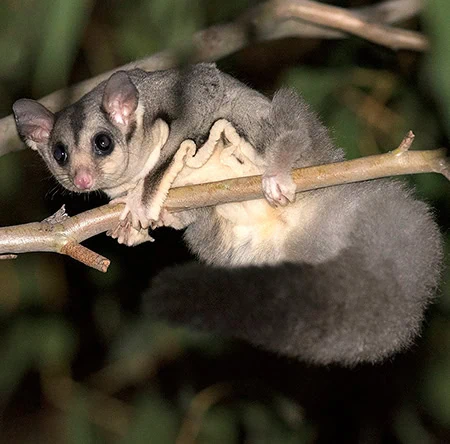
(Petaurus norfolcensis)
Squirrel Glider
Тагуан вивірячий
Its range extends from Bordertown, near the South Australia–Victoria border, through south-eastern Australia to northern Queensland.
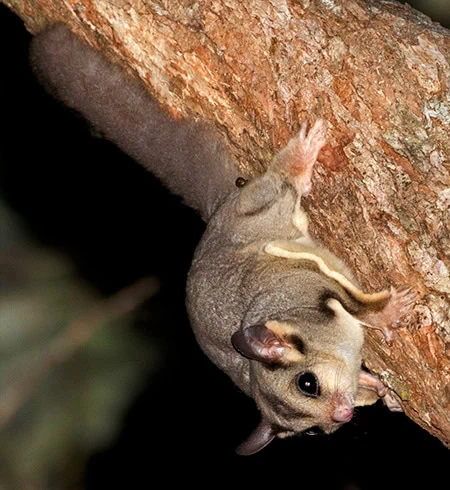
(Petaurus gracilis)
Mahogany Glider
Тагуан граційний
It is restricted to a very small area, between Ollera Creek south of Ingham and Tully in North Queensland, Australia.
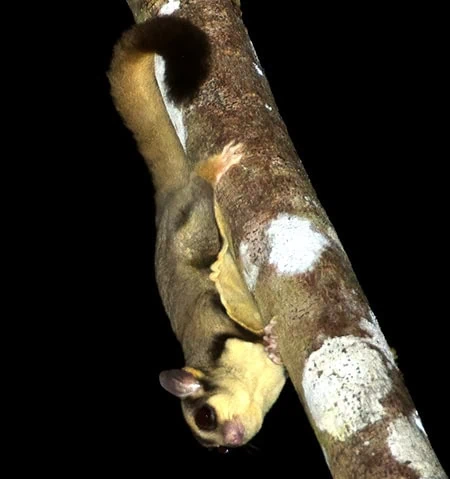
(Petaurus biacensis)
Biak Glider
Тагуан біакський
It is endemic to the Schouten Islands in the western region of Papua Province, Indonesia.
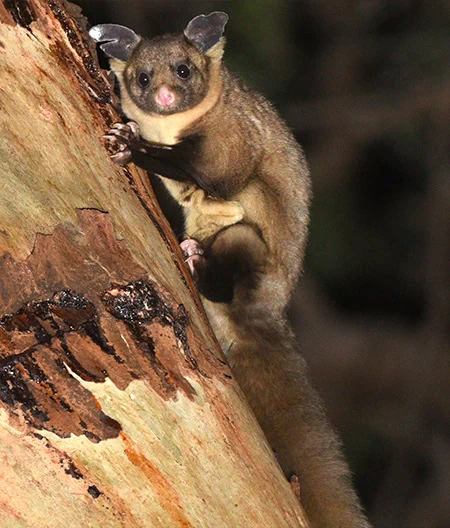
(Petaurus australis)
Yellow-bellied Glider
Тагуан жовтошиїй
It inhabits eucalypt forests in eastern Australia, from northern Queensland south to Victoria, at elevations ranging from sea level to 1,400 m.
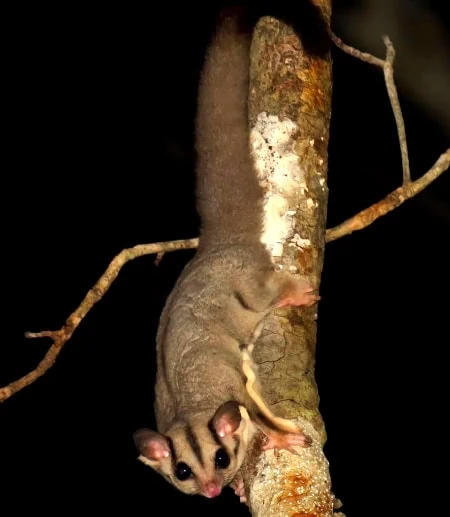
(Petaurus abidi)
Northern Glider
Тагуан північний
It is found in the Torricelli Mountains of the north-western coastal Papua New Guinea.
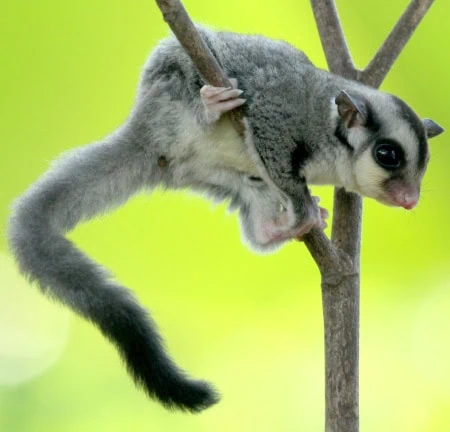
(Petaurus papuanus)
New Guinea Glider
Тагуан новогвінейський
It is found in eastern Indonesia, from the Moluccas to New Guinea, and in Papua New Guinea.
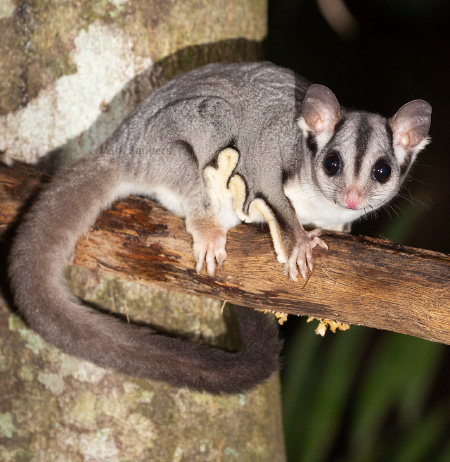
(Petaurus notatus)
Krefft's Glider
Тагуан Креффта
It is found in eastern Australia, from the coastal regions of northern Queensland, excluding the Cape York Peninsula, through most of inland Queensland and New South Wales, southward to Victoria and the southeastern corner of South Australia.
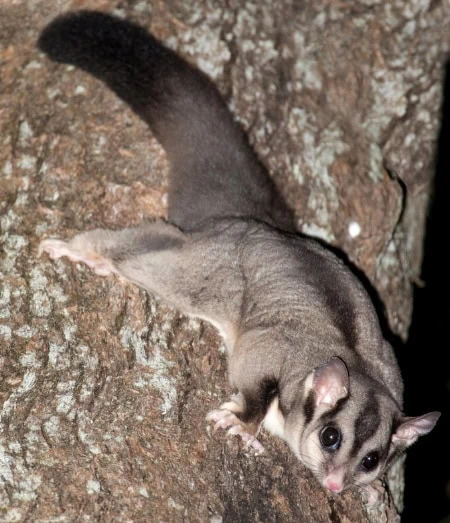
(Petaurus breviceps)
Sugar Glider
Тагуан короткоголовий
It is distributed in the coastal forests of south-eastern Queensland and most of New South Wales. Its distribution extends to elevations of up to 2,000 m in the eastern ranges.
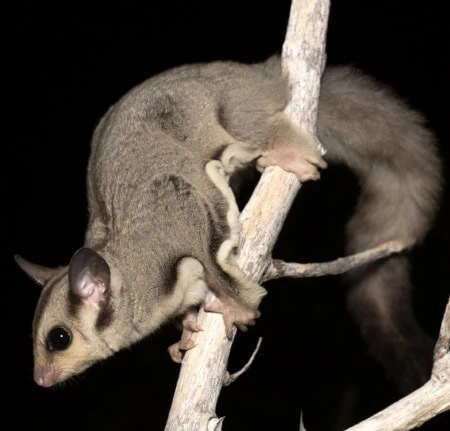
(Petaurus ariel)
Savanna Glider
Тагуан саванний
It lives in the wooded savannas of northern Australia. It ranges from north-western Queensland west through the Northern Territory (including most of the Cobourg Peninsula) to northern Western Australia.
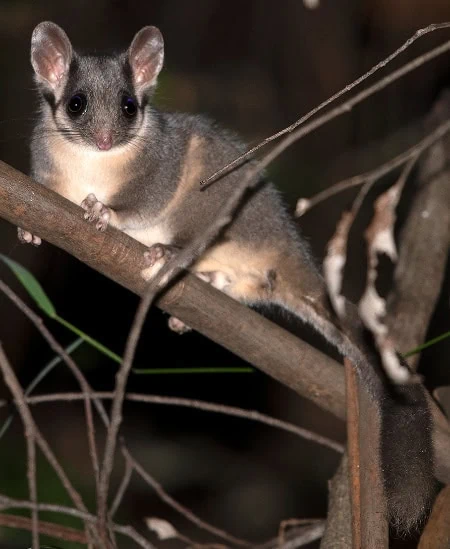
(Gymnobelideus leadbeateri)
Leadbeater's Possum
Поссум Ледбітера
It is restricted to small pockets of alpine ash, mountain ash, and snow gum forests in the Central Highlands of Victoria, Australia, north-east of Melbourne.

(Dactylopsila trivirgata)
Striped Possum
Тріок трисмугий
It is found in New Guinea as well as several other small islands in the area (including the Solomon Islands). It also lives in Queensland, Australia, in rainforests and eucalypt woodland along the east coast of Cape York Peninsula and as far south as Townsville.
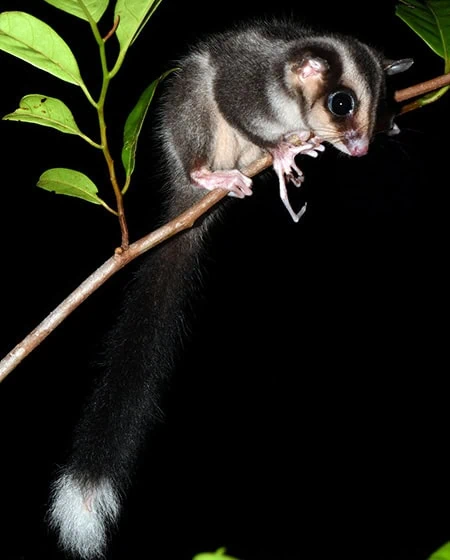
(Dactylopsila kambuayai)
Arfak Striped Possum
Тріок вогелькопський
In 2026, researchers discovered the animal on the Bird’s Head Peninsula of Western New Guinea, Indonesia.
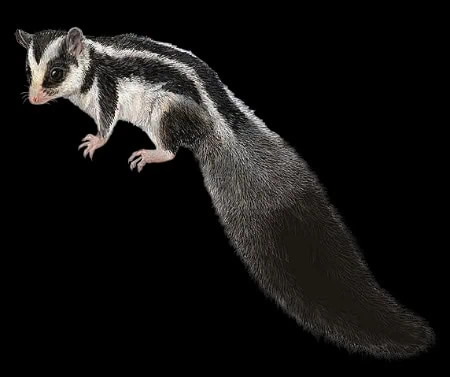
(Dactylopsila megalura)
Great-tailed Triok
Тріок довгохвостий
It is found in West Papua and Papua New Guinea. Its natural habitat is subtropical or tropical dry forests.
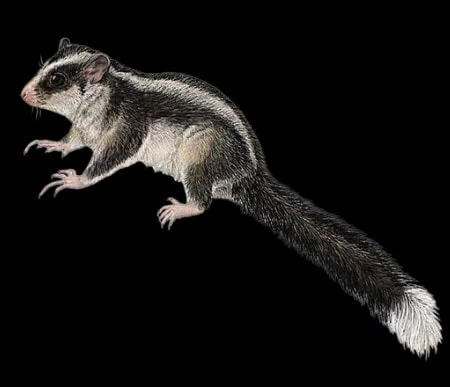
(Dactylopsila palpator)
Long-fingered Triok
Тріок довгопалий
It is found in the mountains of New Guinea, including the Arfak Mountains, the Central Range extending to the extreme southeast, and the Huon Peninsula. It occurs at elevations of 850–3,050 m.
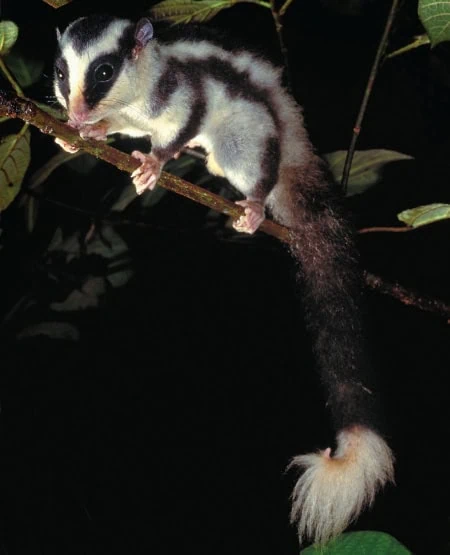
(Dactylopsila tatei)
Tate's Triok
Тріок Тейта
It is endemic to Fergusson Island in southeastern New Guinea. It habitats subtropical or tropical dry forest at elevations of 600–1,000 m.


