

(Gerrhopilidae)
Indo-Malayan Blindsnakes
Сліпуни індо-малайські
The Gerrhopilidae (Indo-Malayan blindsnakes) are a family of blindsnakes that contains at least 16 species in the genus Gerrhopilus, and Cathetorhinus. These blindsnakes are found in India (including the Andaman Islands), Sri Lanka, Nepal, Thailand, the Philippines, Indonesia (including Java, Ternate, Sulawesi, Halmahera, Waigeu, Salawati, Irian Jaya, and Bali), and Papua New Guinea. Their habitats are varied but are generally moist, tropical environments where the soil is soft enough for burrowing. They are nocturnal, coming out mainly at night to feed and explore. Their diet primarily consists of ants, termites, and other small invertebrates, which they hunt using their keen sense of smell rather than sight.
These blindsnakes were considered to be part of the family Typhlopidae and were formerly known as the Typhlops ater species group. In 2010, they were discovered to be distantly related to other typhlopids and separated into their own family. Gerrhopilidae, Xenotyphlopidae, and Typhlopidae are grouped together in the superfamily Typhlopoidea to emphasize their closer relationship to one another than to the other two families of scolecophidians (Leptotyphlopidae and Anomalepididae).
The Gerrhopilidae are thought to have originated on Insular India during the Cretaceous, shortly after its separation from Madagascar. They later colonized other regions of tropical Asia following India’s collision with mainland Asia during the Cenozoic.
Gerrhopilids differ from other blindsnakes in having gland-like structures ‘peppered’ over the head scales. Many species also have a divided preocular and/or ocular scale, and the second supralabialal scale overlaps the preocular in all species but one (G. tindalli).
The appearance of Gerrhopilidae is marked by their smooth, shiny skin, which adapts to their burrowing habits. The skin often appears in shades of brown or gray, helping them blend into the dark environments underground. One of the most distinctive features of these snakes is their eyes, which are very tiny and covered with translucent scales. This feature gives them the name “blindsnakes,” as their vision is highly reduced and adapted only to detect light from the dark, which is sufficient for their survival underground.
These snakes have heads that are not much wider than their bodies, adding to their worm-like appearance. Their tails are also short and blunt, which can be used effectively to compact the soil as they move. Interestingly, despite their small size and delicate appearance, Gerrhopilidae are quite robust in their construction and equipped to handle the pressures of burrowing.
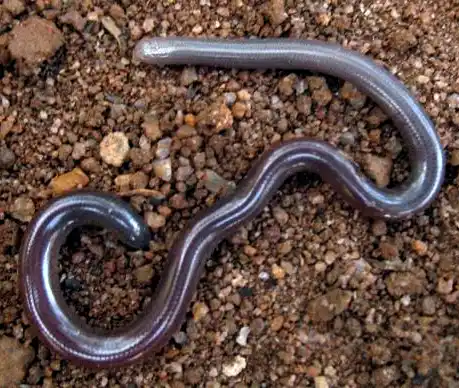
(Gerrhopilus beddomii)
Beddome's Worm Snake
Сліпун Беддоума
It is found in southern India in the Western Ghats and in the Kimedy Hills near Visakhapatnam in eastern India. It inhabits forests at altitudes of 600–950 m.
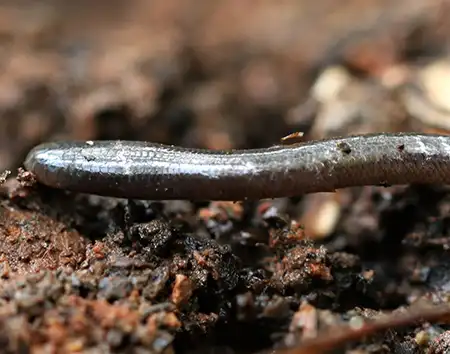
(Gerrhopilus ater)
Black Blindsnake
Сліпун чорний
It is found in Indonesia (Java, Ternate, Sulawesi, Bali, and Irian Jaya) and in Papua New Guinea (the Vogelkop Peninsula and adjacent islands).
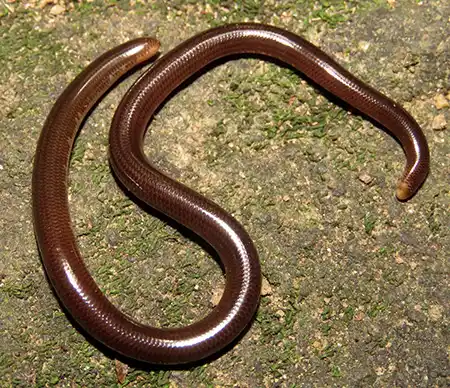
(Gerrhopilus ceylonicus)
Sri Lanka Worm Snake
Сліпун цейлонський
It is endemic to Sri Lanka.
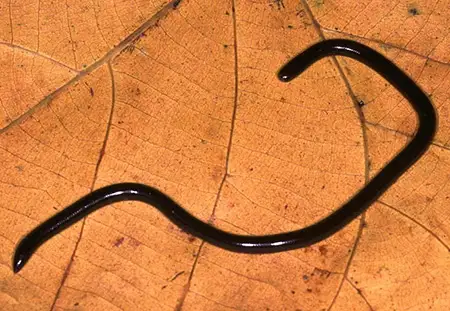
(Gerrhopilus mirus)
Jan's Worm Snake
Сліпун чудовий
It is endemic to Sri Lanka.
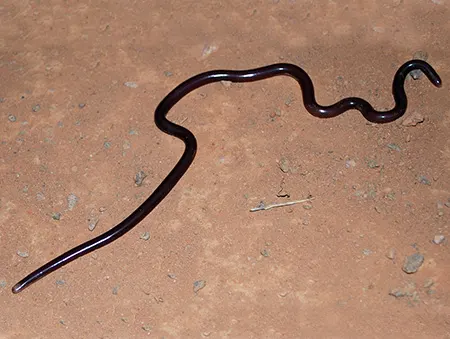
(Gerrhopilus thurstoni)
Thurston's Worm Snake
Сліпун Терстона
It is found in India, occurring in southern Goa from sea level to approximately 1,200 m elevation, and in Kerala.
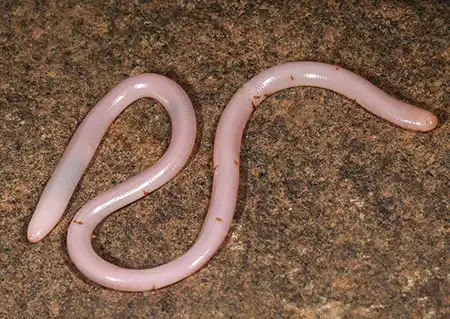
(Gerrhopilus tindalli)
Nilgiri Hills Worm Snake
Сліпун нільгирійський
It is reported only from the hills of Nilambur (Malappuram of Kerala) and Nilgiri hills of Kerala and Tamil Nadu.
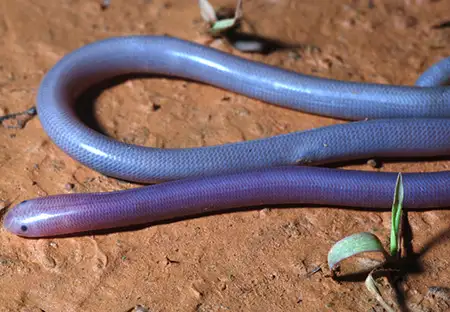
(Gerrhopilus persephone)
Normanby Blind Snake
It is found in Papua New Guinea, specifically on Normanby Island in Milne Bay Province.
(Gerrhopilus floweri)
Flower's Blind Snake
Сліпун Флауера
It is found in Thailand and possibly in Laos. It has been recorded from termite mounds in fruit plantations.
(Gerrhopilus fredparkeri)
Fred Parker's Blind Snake
Сліпун Фреда Паркера
It is endemic to New Guinea and only known from the Central Province and National Capital District, Papua New Guinea.
(Gerrhopilus mcdowelli)
McDowell's Blind Snake
Сліпун Макдауелла
It is endemic to Papua New Guinea and inhabits forests at elevations of 50–600 m.
(Gerrhopilus oligolepis)
Wall's Worm Snake
Сліпун Уолла
It is found in the eastern Himalayas of India (Sikkim and Darjeeling) and in Nepal.
(Gerrhopilus andamanensis)
Andaman Worm Snake
Сліпун андаманський
It is found in the Andaman Islands in the Bay of Bengal.
The genus (Gerrhopilus) also includes: (Gerrhopilus mirus), Western Java Worm Snake (Gerrhopilus bisubocularis), Lowland Beaked Blindsnake (Gerrhopilus depressiceps), (Gerrhopilus eurydice), (Gerrhopilus flavinotatus), (Gerrhopilus hades), Negros Island Blind Snake (Gerrhopilus hedraeus), Montane Blindsnake (Gerrhopilus inornatus), (Gerrhopilus lestes), (Gerrhopilus lorealis), (Gerrhopilus papuanorum), (Gerrhopilus polyadenus), (Gerrhopilus slapcinskyi), (Gerrhopilus sumatranus), (Gerrhopilus suturalis), (Gerrhopilus wallachi).
(Cathetorhinus melanocephalus)
The provenance of this species remains unknown: it is certainly Old World, and may be from (in order of probability) Timor, Australia, Mauritius or Tenerife.
