

(Diprotodontia)
Diprotodonts
дворізцеві
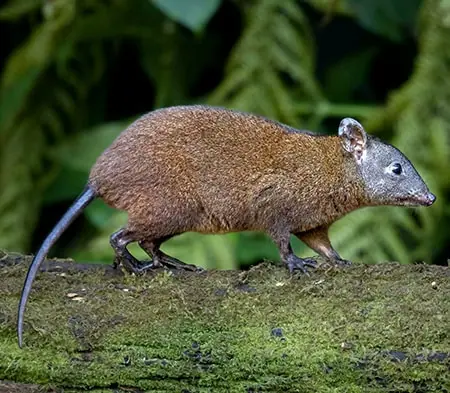 Rat-Kangaroos (hypsiprymnodontidae)
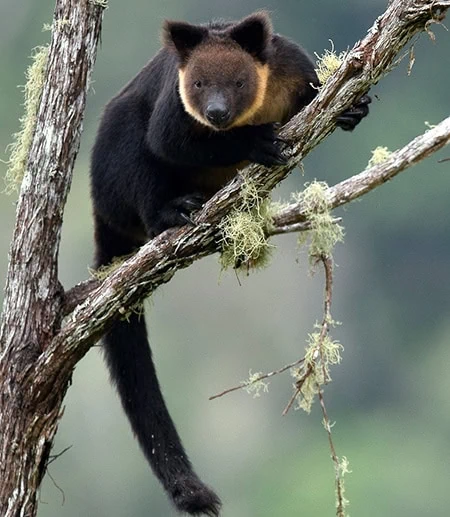 Kangaroos, Wallabies and Allies (macropodidae)
Diprotodontia is the largest extant order of marsupials, with about 155 species, including the kangaroos, wallabies, possums, koala, wombats, and many others. Extinct diprotodonts include the hippopotamus-sized Diprotodon, and Thylacoleo, the so-called “marsupial lion”.
Diprotodonts inhabit Australia, Tasmania, New Guinea, and many islands of Southeast Asia, from Sulawesi to the Solomon Islands. The common brushtail possum (Trichosurus vulpecula) and wallabies have been introduced to New Zealand. Wallabies that escaped from zoos and private properties have established feral populations in England, particularly on the Isle of Man.
Interestingly, although diprotodonts live in both Australia and New Guinea, these landmasses were still part of the Sahul continent until relatively recently, several tens of thousands of years ago. However, only five species of the group are now found in both regions. In Australia, they occur only in northern Queensland and are probably relatively recent arrivals.
As mentioned above, diprotodonts have adapted to practically all types of terrestrial ecosystems in the regions where they live. The only exception is aquatic environments — there are no fully aquatic or semi-aquatic species among the members of this order. This is a common feature of all marsupials: because their young develop in a pouch, they are fundamentally unable to adapt to an aquatic lifestyle.
Possums and tree-kangaroos (Dendrolagus) inhabit dense tropical rainforests. Koalas and various wallabies live in open eucalyptus forests and savannas. Eastern grey kangaroos prefer moist savannas with many trees, while their red relatives inhabit even the dry semi-deserts and deserts of central Australia. Rock-wallabies have adapted to rocky mountain slopes, while small burramys live on rocky slopes high in the mountains, where snow remains for half the year.
The present-day range of many species has been shaped by human activity. For example, many small wallabies once inhabited large areas of mainland Australia, but after the introduction of new predators, such as foxes and cats, they survived only on islands where these species, which are foreign to the local ecosystem, are still absent. On the other hand, some species have adapted to living alongside humans, not only in agricultural landscapes but even on the outskirts of cities.
Feeding
Diprotodonts evolved as herbivores and have remained predominantly herbivorous to this day. Even those species that no longer feed on plant matter are descended from herbivorous ancestors. Australia is an ancient continent that has experienced little significant geological activity for a very long time. As a result, its soils are relatively poor in minerals and, consequently, its flora is relatively low in nutrients. Herbivores therefore had to adapt to these unfavourable conditions. In many diprotodont species, the digestive tract is enlarged or elongated to improve digestion and extract as many nutrients as possible from food. This allows them to feed on grass and leaves with low nutritional value. For example, kangaroos eat considerably less than sheep or other placental mammals of a similar size. In other words, they are more energy-efficient than ruminants, which are among the most efficient consumers of plant matter among vertebrates. Animals that feed on particularly poor food have also evolved additional adaptations to conserve energy. For example, koalas, which famously feed on eucalyptus leaves, sleep for up to twenty hours a day. Koalas and wombats also conserve energy by warming themselves in the sun, a behaviour more commonly associated with cold-blooded animals. The relatively low metabolic rate of marsupials compared with placental mammals also plays a role.
Some diprotodont species are omnivorous and supplement their plant-based diet with insects, worms, and small vertebrates. For these animals, animal food is generally more important as a source of protein than calories. Only a few small species are true insectivores. The long-nosed pygmy possum (Tarsipes rostratus), by contrast, has an elongated snout and feeds on pollen and nectar from flowers.
Behavior
Diprotodonts are predominantly crepuscular or nocturnal animals. The only species known to be exclusively diurnal is the musky rat-kangaroo (Hypsiprymnodon moschatus) from Queensland, while some members of the order that inhabit dense forests are active both during the day and at night. Some species graze in open areas at night and return beneath the tree canopy during the day.
Overall, most species in the order are not strictly nocturnal and can readily be active during the day, especially in shaded areas. Some nocturnal species may also emerge in the morning after a cold night to bask in the sun. In general, basking is an important energy-saving strategy for species such as koalas and wombats. This is related to the low-calorie foods on which these animals feed and the lower metabolic rate of marsupials compared with placental mammals.
A unique member of the diprotodonts is Burramys parvus, the only marsupial species known to hibernate during winter, remaining in hibernation for about six months. Some other species can enter torpor when food is scarce or temperatures drop sharply, including Tarsipes rostratus and Acrobates pygmaeus.
Diprotodonts are generally solitary animals. Even when they gather in groups, there is no evidence of a complex social life. Kangaroos form herds, but these groups have neither a clear hierarchy nor any apparent signs of cooperation. Males generally dominate females, although this is usually not expressed overtly and becomes apparent mainly during mating.
Males are also more mobile and change herds more frequently, whereas females often remain in their maternal group. As mentioned above, there is no specialised cooperation within these herds, but simply staying among other members of the same species increases an individual’s safety, as potential predators may be detected by other animals.
Wombats regularly visit each other’s burrows, but they do not form groups. Koalas often feed from the same tree, but usually do so at different times. Only one wombat species forms large groups of up to fifty individuals, living in interconnected burrow systems.
Among diprotodonts, there are both species that maintain permanent individual territories and shelters and species that are nomadic. Most of the larger kangaroo species are semi-nomadic, particularly the largest of them, the red kangaroo, which can travel more than 300 km in search of water and food when necessary. Wallabies are less mobile, and although none of the kangaroos and wallabies build actual dens, smaller kangaroo species seek out well-shaded resting places among dense vegetation. In some areas, especially when water is scarce, animals compete fiercely for such shelters. Rat-kangaroos build nests from grass and leaves, concealing them in dense vegetation. Wombats dig deep burrows.
Most arboreal diprotodonts build nests or shelters. Many species use nests made by birds or other mammals, as well as tree hollows, hollow trunks, and similar sites. Unlike birds, arboreal diprotodonts use these shelters not for raising their young but for resting. Consequently, both females and males build them for themselves, and an individual usually has several shelters within its territory.
Breeding
Like all marsupials, diprotodonts have paired reproductive organs. Females have two vaginas and two uteri, while males have a bifurcated penis. The birth canals in most marsupials are temporary and close after giving birth, but in kangaroos and honey possums they remain permanently open.
Diprotodonts have the short gestation period typical of marsupials, lasting from two weeks to about a month. The young are born very small and underdeveloped. After birth, the newborn crawls into the mother’s pouch, where it attaches firmly to one of the teats. Once the young animal latches onto a teat, it swells and fills the newborn’s mouth. The young cannot control the flow of milk itself and remains firmly attached to the teat until it has developed sufficiently to move around independently.
If more young are born than the mother has teats, only those that manage to secure a teat survive. Most diprotodonts give birth to relatively few young — usually one or two. Only the mountain cuscuses can have as many as eight young, but since they have only four teats, all the others die.
Many diprotodonts exhibit an interesting phenomenon known as embryonic diapause. Gestation in marsupials is so short that it does not interrupt the normal oestrous cycle. As a result, females quickly become pregnant again after giving birth, but as long as the pouch is occupied, embryonic development remains suspended at its earliest stages. However, as soon as the young animal dies, leaves the pouch, or is almost fully independent of it, embryonic development resumes. As a result, in some species the interval during which the pouch is empty may last only a single day, while in others, young of different ages may share the pouch at the same time. Interestingly, in the latter case, the milk produced by different teats, from which the young feed, differs in chemical composition. In effect, when embryonic diapause occurs, females are pregnant almost continuously. However, given the tiny size of the embryos, this places little significant burden on the mother’s body. The mechanism of embryonic diapause is regulated by the same hormones that control lactation.
It takes from several weeks to several months for the young to develop sufficiently to move around independently. Many species continue to nurse their young even after they leave the pouch. Wombats and cuscuses often continue to carry their young on their backs for some time after they leave the pouch. Usually, several more months pass before the young become fully independent and leave their mother.
Most diprotodonts are relatively long-lived animals. In smaller species, life expectancy ranges from about 6 to 14 years; in koalas, it approaches 20 years, while in wombats and large kangaroos, it is around 20 years.