
(Macropodidae)
Kangaroos, Wallabies and Allies
Кенгурові
Macropodidae is a family of marsupials that includes kangaroos, wallabies, tree-kangaroos, wallaroos, pademelons, the quokka, and several other groups. These genera are allied to the suborder Macropodiformes, containing other macropods, and are native to the Australian continent (the mainland and Tasmania), New Guinea and nearby islands.
Macropods have adapted to almost every type of landscape found in Australia and New Guinea, from dry and hot deserts to humid forests and cool alpine grasslands. It is not uncommon for several species of macropods, often belonging to different genera, to inhabit the same area. In the humid forests along the Great Dividing Range, as many as 12 different species can occur in a single locality.
Different genera of macropods have adapted to different environments. Species belonging to genera such as Dorcopsis, Dorcopsulus, and the tree-kangaroos live exclusively in the rainforests of northern Australia and New Guinea. Pademelons also prefer humid forests, but are less specialised and range from New Guinea to Tasmania. Rock-wallabies (Petrogale) inhabit a wide variety of climates, from arid regions to humid tropical environments, but their ranges are always associated with rocky habitats, such as rocky slopes, boulder fields, rocky outcrops, and similar terrain. By contrast, species of the genera Lagorchestes and Onychogalea are not tied to any particular landscape and can inhabit semi-deserts, grasslands, scrublands, and humid savannas. The most adaptable genus is Macropus, whose representatives occur in almost every habitat where the family is found.
Behavior
In general, the behaviour of macropods, as typical herbivores, is similar to that of bovids and deer of comparable size. Small, specialised herbivores usually live alone, whereas large, generalist herbivores tend to live in groups. Although macropods are generally not highly social animals, some larger species occasionally form herds of fifty or more individuals on suitable grazing grounds. While some social interactions occur within these groups, they generally lack a clear organisation or hierarchy and are essentially temporary, loosely organised aggregations.
Macropods do not form permanent family groups, so males must compete with one another each time for the opportunity to mate with females. Individuals of higher status generally have better chances, and in medium-sized and large species, status is primarily associated with body size. This results in pronounced sexual dimorphism in many species. For example, female red kangaroos rarely weigh more than 30 kg, whereas males typically weigh around 85 kg. Male hierarchies among macropods are highly unstable, so males regularly fight to establish their status relative to one another. This is particularly characteristic of larger species with pronounced sexual dimorphism. Fighting plays such an important role that the better-developed forelimbs of males compared with females in some macropods species are thought to be an adaptation for use in these contests.
Large species are diurnal, but their activity peaks occur in the morning and evening. Many smaller species are nocturnal. During the hours of darkness, they may avoid predators or escape the heat of the day. Small species are predominantly solitary and avoid predators by hiding from them. Among the larger species, many form herds, as group living provides a degree of safety: it is much more difficult for a predator to approach a group of animals undetected than a single individual.
Feeding
Macropods are predominantly herbivorous, although some smaller species are omnivorous. In general, smaller species are more specialised and tend to feed on more calorie-rich foods, such as fruits, seeds, fungi, and invertebrates. Larger species, by contrast, are mostly generalist herbivores that consume a wide variety of plants. Their enlarged stomachs help them digest a range of low-calorie foods, such as leaves and grass.
Breeding
Macropods do not form permanent pairs or harem groups. In kangaroos, wallabies, and tree-kangaroos, the age at sexual maturity is directly correlated with body size. In larger species, females reach sexual maturity at two to three years of age, while in some smaller species they may reach maturity as early as four to five months after leaving their mother. Males generally reach sexual maturity later than females.
Large species exhibit pronounced sexual dimorphism, with males sometimes being two to three times larger than females. Male body size directly influences social status, so the largest males father most of the offspring. In smaller species, sexual dimorphism is less pronounced, and adult males and females are generally similar in size.
All macropods species give birth to a single young, less commonly two. Most species exhibit a phenomenon known as embryonic diapause, in which embryonic development is suspended at a certain stage until the previous young leaves the pouch and makes room for the next one. Embryonic diapause can reduce the interval between births, sometimes to as little as one day. It also allows females to respond more flexibly to changing environmental conditions or the loss of their young. Most species breed year-round, although some have seasonal breeding periods.
As in other marsupials, young macropods are born extremely small — only 5–15 mm long — with underdeveloped hind limbs, tails, and eyes. Their forelimbs, however, are well developed, and they use them to crawl from the birth canal to the mother’s pouch, where they firmly attach themselves to a teat. Depending on the species, the period of suckling in the pouch lasts from 180 to 320 days. Even after growing larger and leaving the pouch, the young continue to nurse from their mother for some time. This period is quite long in larger species, while in some smaller species it is practically absent.
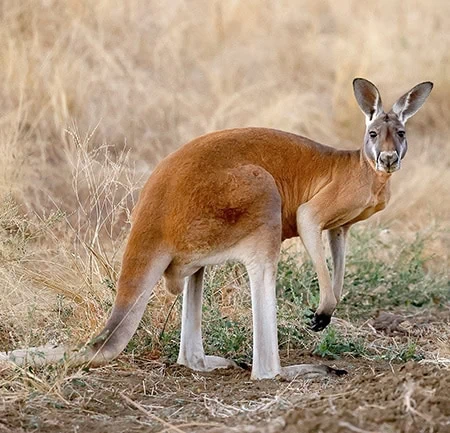
(Osphranter rufus)
Red Kangaroo
Кенгуру рудий
It is found across mainland Australia, except for the more fertile areas, such as southern Western Australia, the eastern and southeastern coasts, and the rainforests along the northern coast.
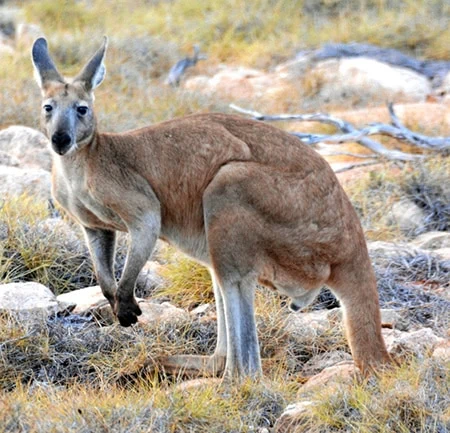
(Osphranter robustus)
Common Wallaroo
Кенгуру східний
It is found throughout most of Australia, except for some southern regions.
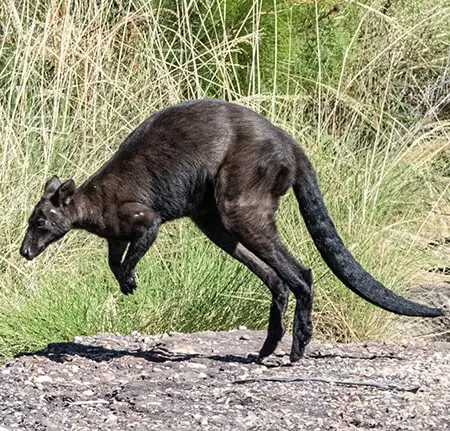
(Osphranter bernardus)
Black Wallaroo
Кенгуру чорний
Its distribution is restricted to a small, mountainous area in Arnhem Land, Northern Territory, Australia, between South Alligator River and Nabarlek. The favoured habitat has a monsoonal climate, and is most commonly found in these types of woodlands, rainforest over sandstone and on sandy plains dominated by a variety of grasses.
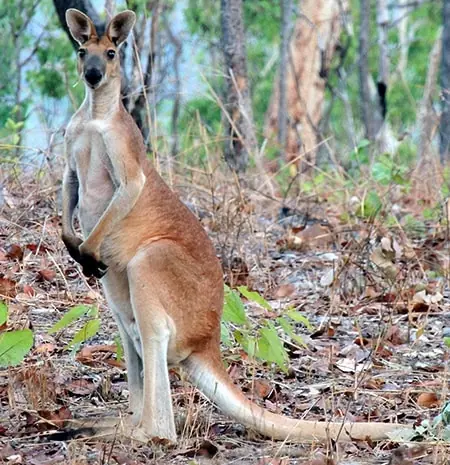
(Osphranter antilopinus)
Antilopine Wallaroo
Кенгуру антилоповий
The distribution range extends inland from the northern coast of the continent, from the Kimberley region in Western Australia across the Top End and narrowly extending to a wider range at tropical regions at the east of Cape York.
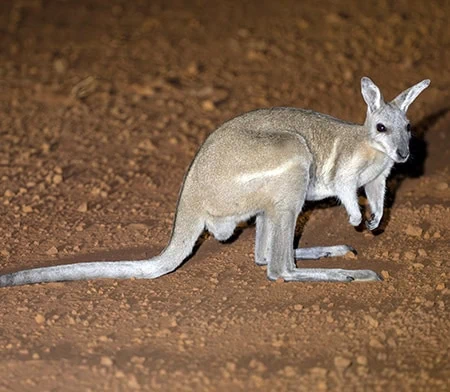
(Onychogalea unguifera)
Northern Nail-tail Wallaby
Кенгуру плоскокігтевий
It is endemic to northern Australia and inhabits a wide range of arid habitats. It occurs in the northern parts of the continent, generally inland from the coastline, from the east at Cape York Peninsula, through the Top End and through the Kimberley region to the northwestern coast.
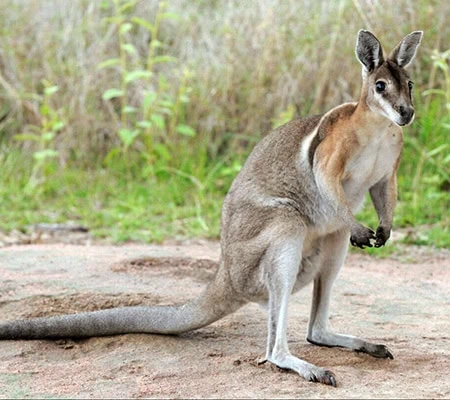
(Onychogalea fraenata)
Bridled Nail-tail Wallaby
Кенгуру короткокігтевий
It is found in three isolated areas in Queensland, Australia, and whose population is declining. It inhabits the edges of eucalyptus forests and areas of sparse scrub and grass.
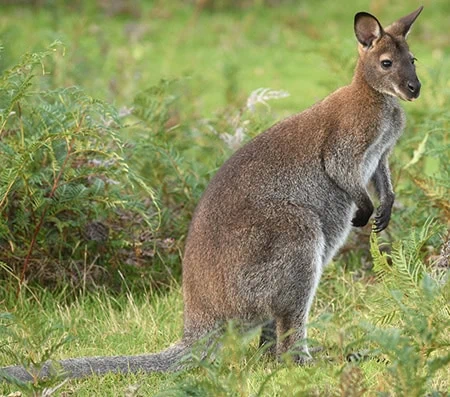
(Notamacropus rufogriseus)
Red-necked Wallaby
Кенгуру Беннетта
It is found in coastal scrub and sclerophyll forests throughout coastal and highland regions of eastern Australia, from Bundaberg, Queensland, to the South Australian border, as well as in Tasmania and on many islands in Bass Strait.
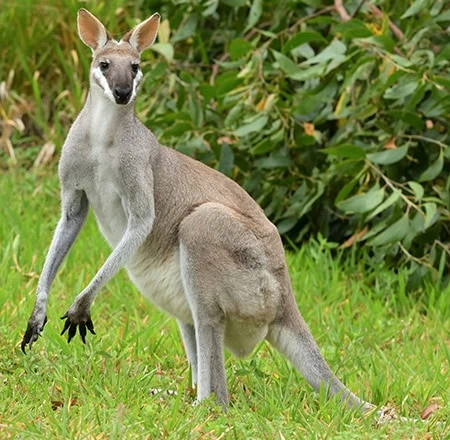
(Notamacropus parryi)
Whiptail Wallaby
Кенгуру Паррі
It is found in eastern Australia. It is locally common from Cooktown in Queensland to near Grafton in New South Wales.
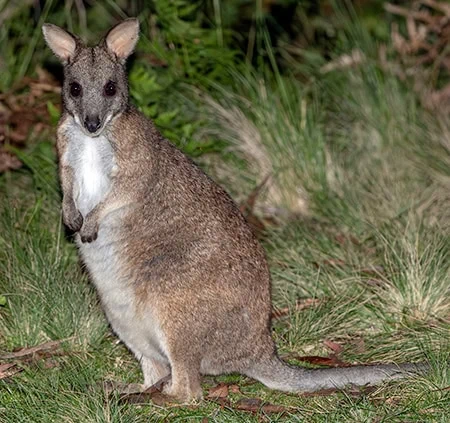
(Notamacropus parma)
Parma Wallaby
Кенгуру Парма
It is native to forests and densely-vegetated areas of northeastern New South Wales, Australia, close to the border with Queensland. An introduced population exists on New Zealand’s Kawau Island.
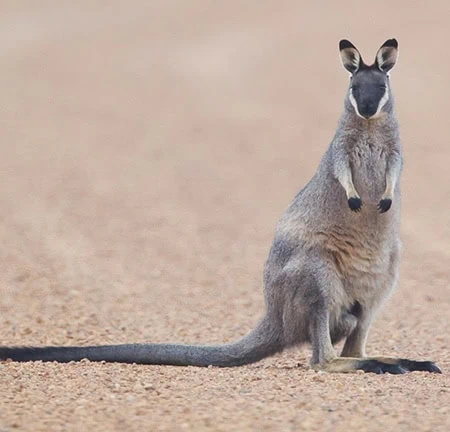
(Notamacropus irma)
Western Brush Wallaby
Квура
It is found in the southwest coastal region of Western Australia from Kalbarri all the way down to Cape Arid. They are found in some areas of mallee and heathland and are uncommon in wet sclerophyll forests.
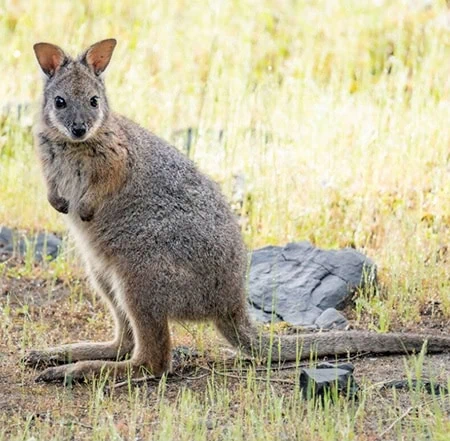
(Notamacropus eugenii)
Tammar Wallaby
Кенгуру тамар
It is native to South and Western Australia. It has been introduced to New Zealand and reintroduced to some areas of Australia where it had been previously extirpated.
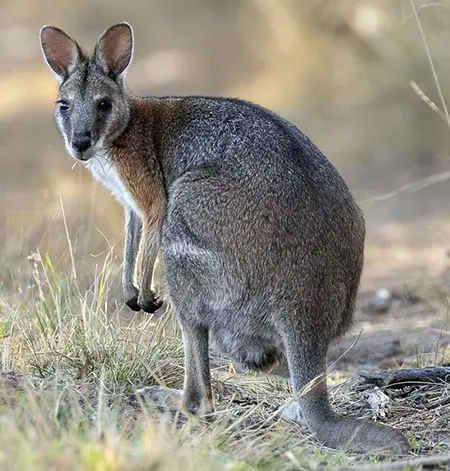
(Notamacropus dorsalis)
Black-striped Wallaby
Кенгуру чорносмугий
It is found in Australia, from Townsville in Queensland to Narrabri in New South Wales. In New South Wales, it is only found west of the Great Dividing Range.
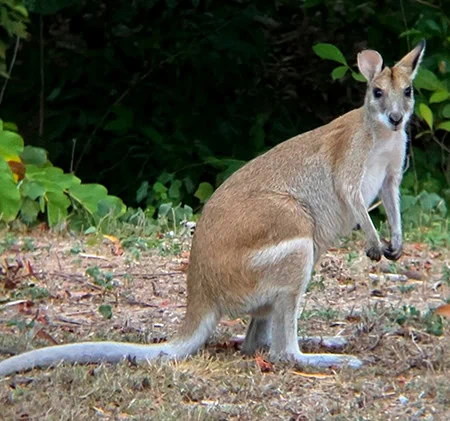
(Notamacropus agilis)
Agile Wallaby
Кенгуру прудкий
It is found in northern Australia, Papua New Guinea and the Indonesian province of South Papua. Its typical habitats are dry open woodland, heaths, dunes and grassland.
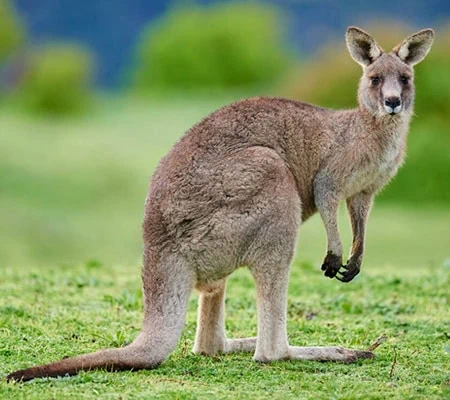
(Macropus giganteus)
Eastern Grey Kangaroo
Кенгуру велетенський
It is found in the eastern third of Australia. It prefers open grassland with areas of bush for daytime shelter and mainly inhabits the wetter parts. It also inhabits coastal areas, woodlands, sub-tropical forests, mountain forests, and inland scrubs.
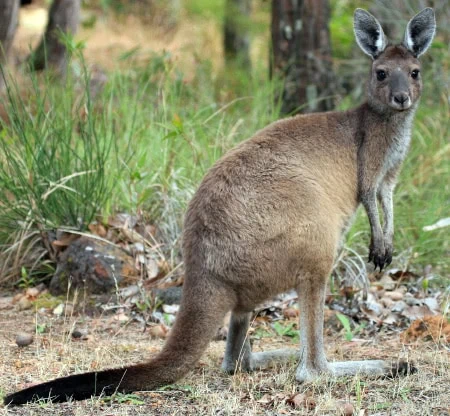
(Macropus fuliginosus)
Western Grey Kangaroo
Західний сірий кенгуру
It is found across almost the entire southern part of Australia, from just south of Shark Bay through coastal Western Australia and South Australia, into western Victoria, and in the entire Murray–Darling basin in New South Wales and Queensland.
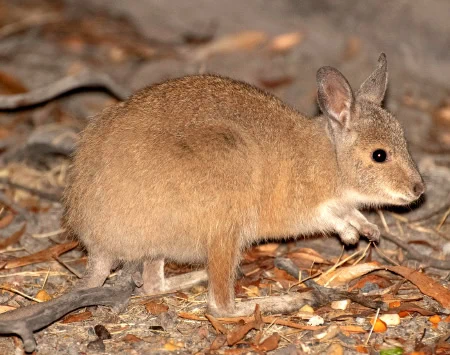
(Lagorchestes hirsutus)
Rufous Hare Wallaby
Кенгуру жмутохвостий
It is found on Bernier and Dorre Islands off the coast of Western Australia.
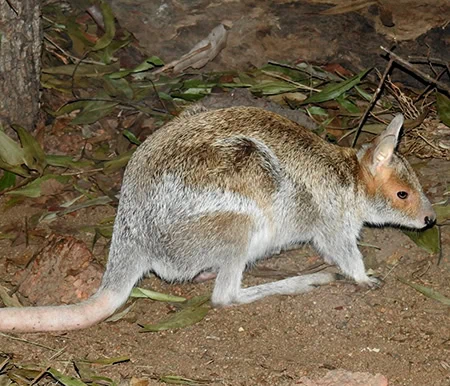
(Lagorchestes conspicillatus)
Spectacled Hare Wallaby
Кенгуру очковий
It is found across northern Australia, from Queensland to Western Australia, in tropical tussock and spinifex habitats. It also occurs in the savanna country of south-western Papua New Guinea, in the upper Bensbach River area.
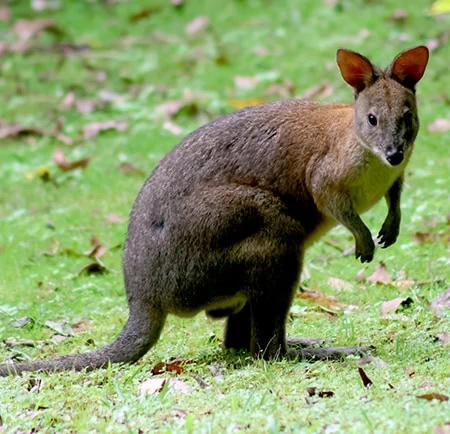
(Thylogale thetis)
Red-necked Pademelon
Падемелон червоношиїй
It is found in the eastern coastal region of Australia between extreme south-east Queensland and central eastern New South Wales.
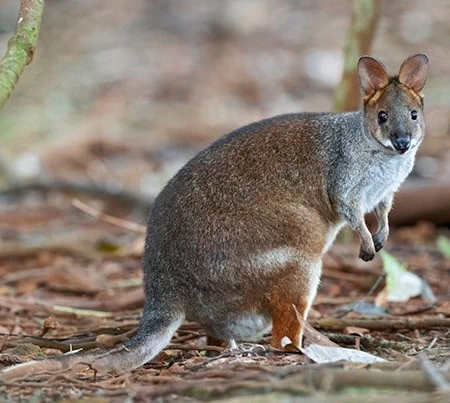
(Thylogale stigmatica)
Red-legged Pademelon
Падемелон червононогий
It is found on the north-eastern coast of Australia and in New Guinea. In Australia it has a scattered distribution from the tip of Cape York Peninsula in Queensland to around Tamworth in New South Wales. In New Guinea it is found in south central lowlands.
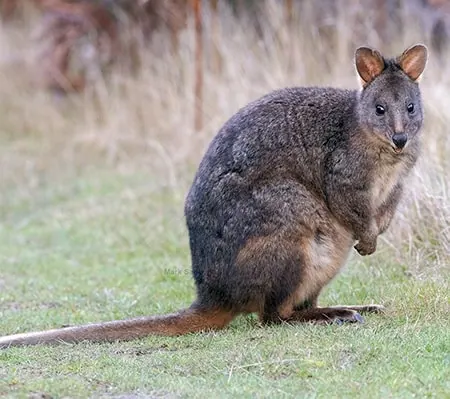
(Thylogale billardierii)
Rufous-bellied Pademelon
Падемелон тасманійський
It is abundant and widespread across mainland Tasmania, and are also found on the nearby King and Furneaux Islands. Rainforest, sclerophyll forest, and scrubland are preferred, although wet gullies in dry open eucalyptus forest are also used.
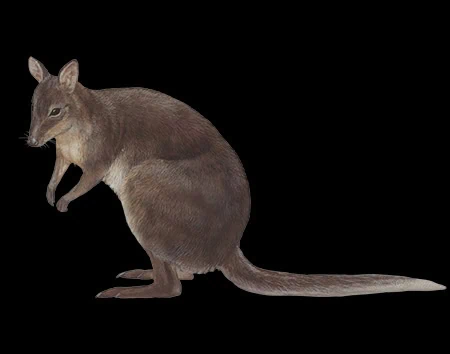
(Thylogale browni)
Brown's Pademelon
Падемелон Брауна
It is found in New Guinea. Its natural habitats are subtropical or tropical dry forests, dry savanna, subtropical or tropical dry shrubland, and subtropical or tropical dry lowland grassland.
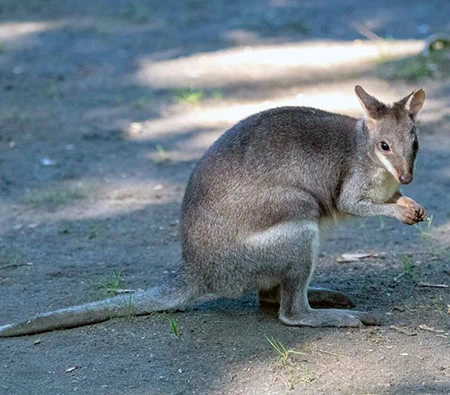
(Thylogale brunii)
Dusky Pademelon
Падемелон імлистий
It is found in the Aru and Kai islands and the Trans-Fly savanna and grasslands ecoregion of New Guinea. Its natural habitats are subtropical or tropical dry forests, dry savanna, subtropical or tropical dry shrubland, and subtropical or tropical dry lowland grassland.
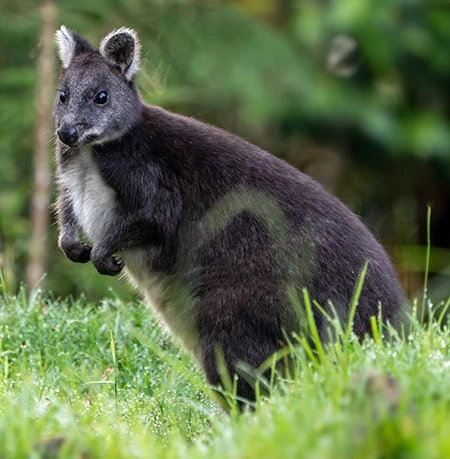
(Thylogale calabyi)
Calaby's Pademelon
Падемелон Калабі
It is currently only found in two locations in Papua New Guinea, at elevations of about 2,800 m.
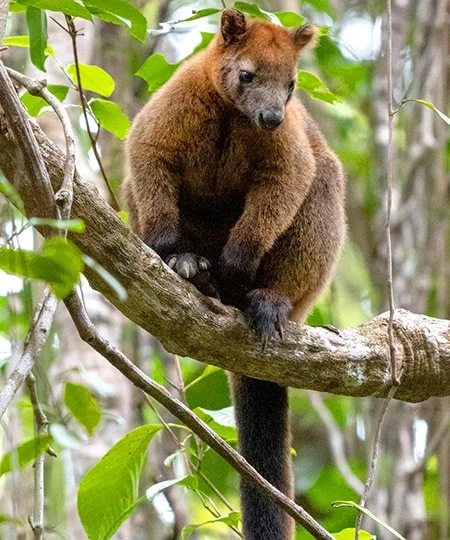
(Dendrolagus bennettianus)
Bennett's Tree Kangaroo
Деревний кенгуру Бенета
It is found in both mountain and lowland tropical rainforests, ranging from south of Cooktown, Queensland, to just north of the Daintree River in Australia, an area of only about 70 by 50 km. It is also occasionally found in sclerophyll woodlands.
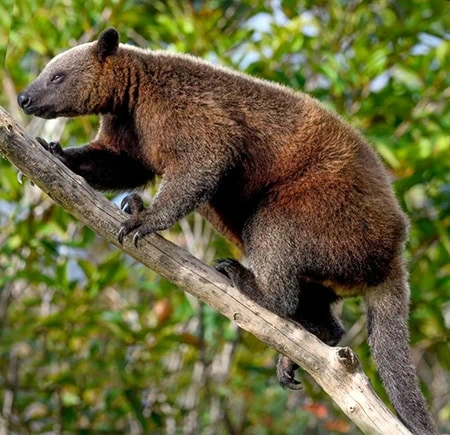
(Dendrolagus dorianus)
Doria's Tree Kangaroo
Деревний кенгуру Доріа
It is found in montane forests of south-eastern New Guinea island, at elevations of 600–3,650 m.
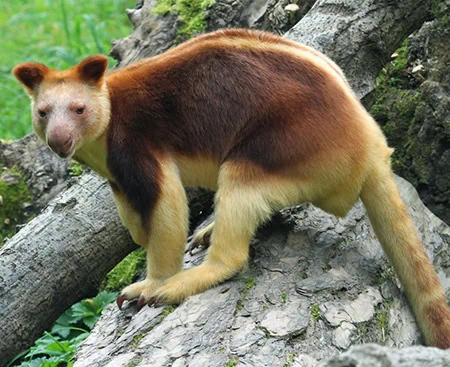
(Dendrolagus goodfellowi)
Goodfellow's Tree Kangaroo
Деревний кенгуру Ґудфеллоу
It lives in dense tropical rainforests and deciduous forests over mountain ranges, ranging from the border of central Irian Jaya in Indonesia to central and eastern Papua New Guinea.
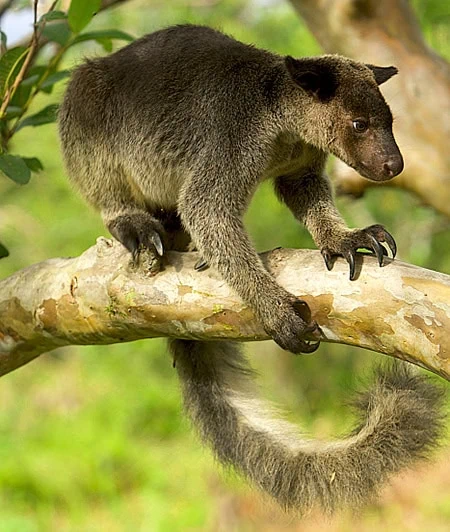
(Dendrolagus inustus)
Grizzled Tree Kangaroo
Деревний кенгуру інустус
It is native to tropical, foothill rainforests of northern and western New Guinea and some offshore island. It can be found at elevations up to 1,400 m.
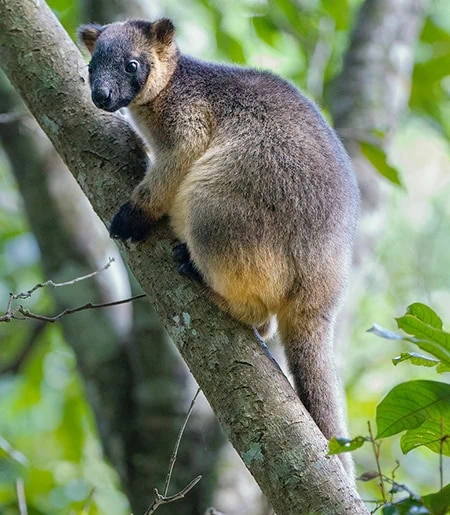
(Dendrolagus lumholtzi)
Lumholtz's Tree Kangaroo
Деревний кенгуру Лумгольтца
It is found in rainforests in northeastern Australia, in the hilly, fertile Atherton Tableland near Cairns in north east Queensland, at elevations of up to 1,600 m.
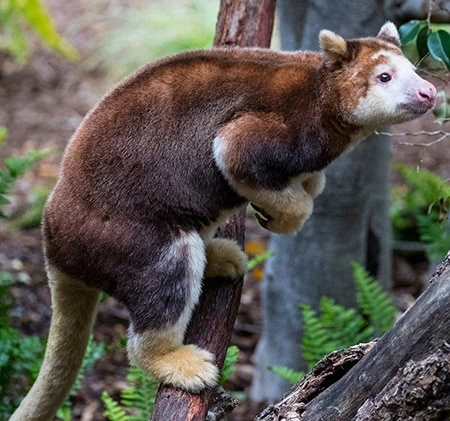
(Dendrolagus matschiei)
Huon Tree Kangaroo
Деревний кенгуру Матчі
It is native to the Huon Peninsula of north-eastern New Guinea island, within the nation of Papua New Guinea. It lives in the mountainous rainforests at elevations of 1,000–3,000 m.
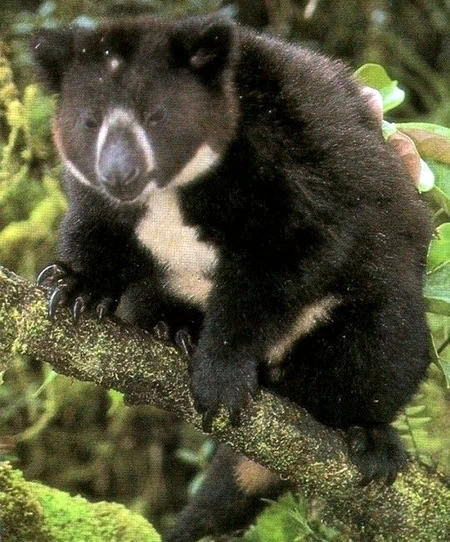
(Dendrolagus mbaiso)
Dingiso
Дінґізо
It is found in sub-alpine forests in the Sudirman Range in Central Papua and Highland Papua in Western New Guinea. It lives just below the tree line, at elevations of 3,250–4,200 m.
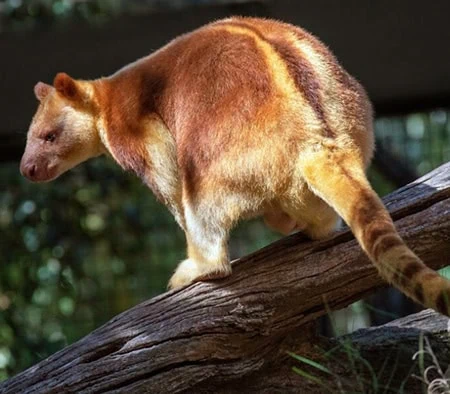
(Dendrolagus pulcherrimus)
Golden-mantled Tree Kangaroo
It is native to two locations on the island: the Torricelli Mountains of north-western Papua New Guinea; and the Foja Mountains of north-eastern Papua Province, in Western New Guinea of Indonesia. It has been recorded at elevations of 680–1,700 m.
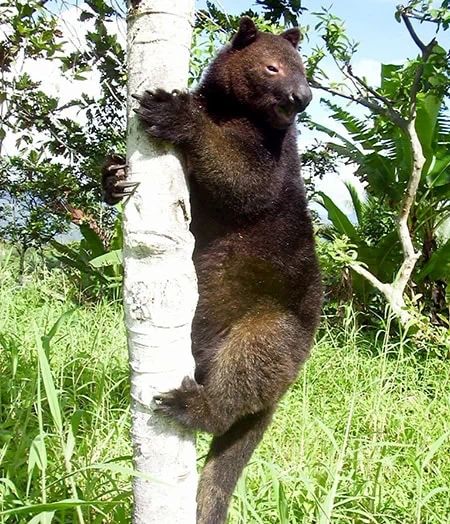
(Dendrolagus scottae)
Tenkile
Тенкіл
It is endemic to a very small area of the Torricelli Mountains of Papua New Guinea. Its natural habitat is subtropical or tropical dry forests at elevations of 900–1,700 m.
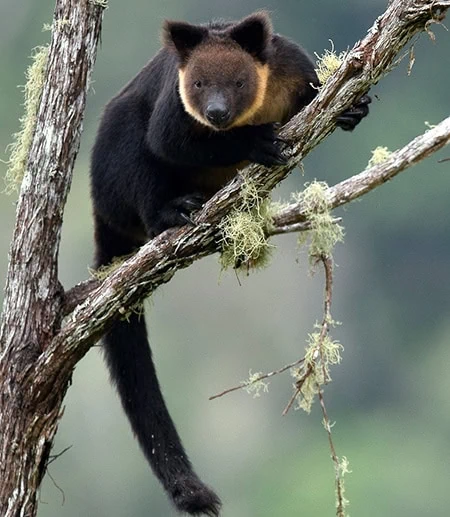
(Dendrolagus ursinus)
Ursine Tree Kangaroo
Деревний кенгуру ведмежий
It is endemic to the island of New Guinea, the species is present on the Vogelkop Peninsula in the far northwest of the island and possibly also the Fakfak Peninsula in West Papua. It occurs in tropical forests at elevations of 1,000–2,500 m.
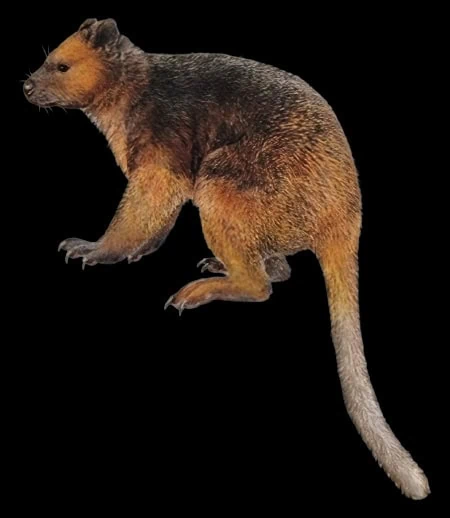
(Dendrolagus mayri)
Wondiwoi Tree Kangaroo
Деревний кенгуру Мейєра
It is native to tropical mountain forests on the island of New Guinea in Western Papua at elevations of up to 1,600 m.
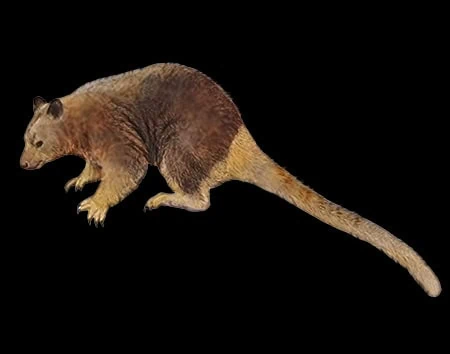
(Dendrolagus notatus)
Ifola Tree Kangaroo
It is endemic to Papua New Guinea where it is found in the central mountains, at elevations of 900–3,100 m.
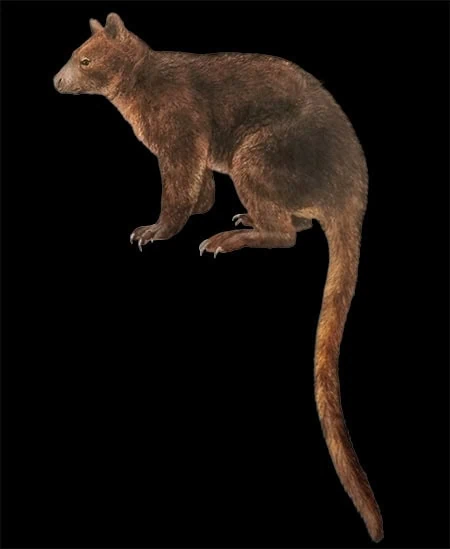
(Dendrolagus spadix)
Lowlands Tree Kangaroo
Деревний кенгуру рівнинний
It is endemic to the Southern New Guinea lowland rainforests ecoregion in the south-western part of New Guinea, within the nation of Papua New Guinea. It occurs at elevations below 800 m.
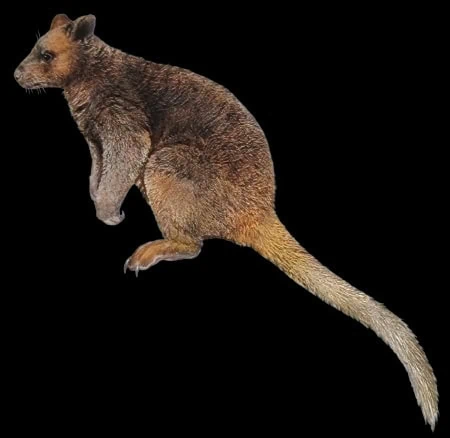
(Dendrolagus stellarum)
Seri’s Tree Kangaroo
It is found in montane forests of west-central New Guinea at elevations of 2,600–3,200 m.
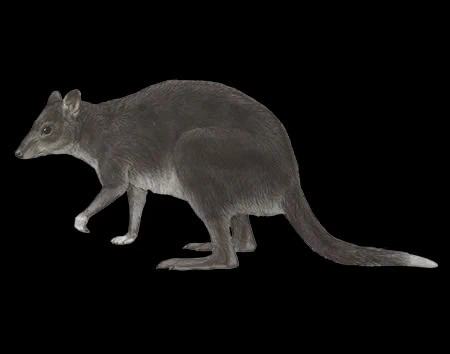
(Dorcopsis atrata)
Black Dorcopsis
Лісовий валабі чорний
It is endemic to Goodenough Island at the eastern end of New Guinea where its natural habitat is subtropical or tropical dry forests. It occurs at elevations of 1,000–1,800 m.
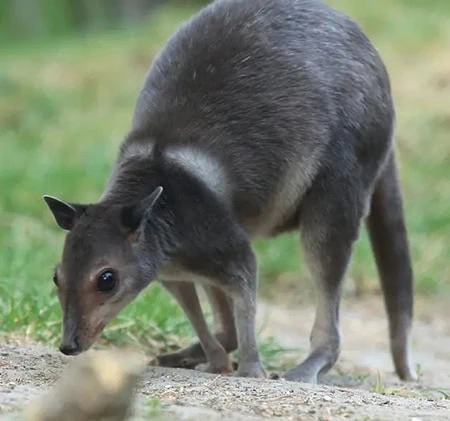
(Dorcopsis hageni)
White-striped Dorcopsis
Кенгуру Хагена
It is found in the northern part of Western New Guinea, Indonesia and Papua New Guinea at elevations of up to 400 m.
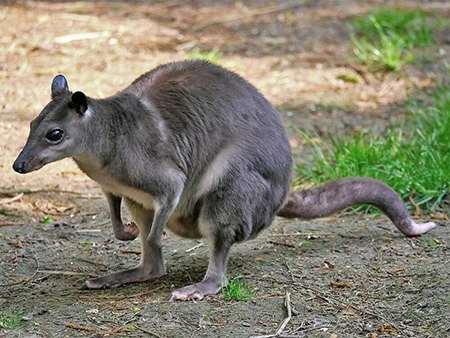
(Dorcopsis muelleri)
Brown Dorcopsis
Чагарниковий кенгуру Мюллера
It is endemic to the western end of New Guinea and the islands to the west of this, Misool and Salawati and possibly also Batanta and Waigeo. Its typical habitat is swampy tropical lowland forest including areas that flood in the rainy season.
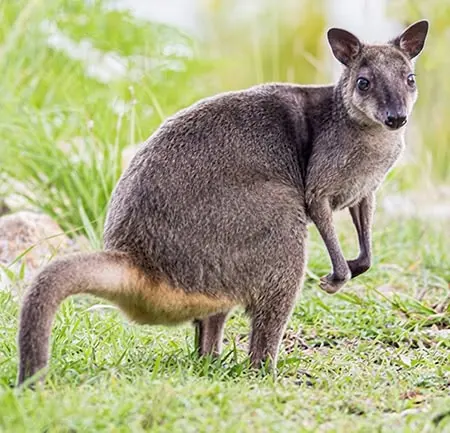
(Dorcopsis luctuosa)
Gray Dorcopsis
Лісовий валабі сірий
It is endemic to the southern and south-eastern part of the island of New Guinea where it occurs at altitudes of up to 400 m. Its habitat is tropical primary and secondary forest, in particular gallery forest, and it is also found in disturbed areas such as abandoned gardens.
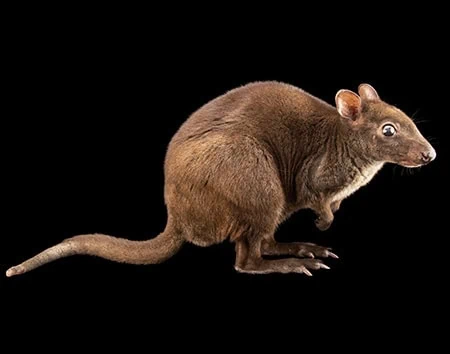
(Dorcopsulus macleayi)
Macleay's Dorcopsis
Кенгуру Маклея
It is endemic to the south-eastern part of the island of New Guinea. It is found in hilly areas and lower montane slopes at altitudes of 1,000–1,800 m where it occurs in both primary and secondary tropical moist forest.
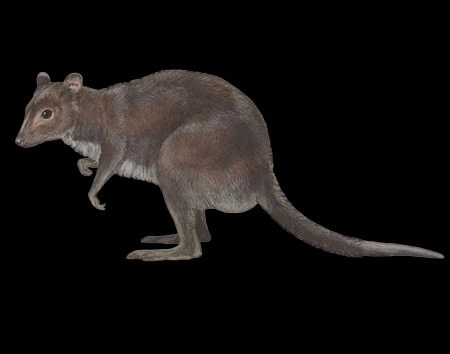
(Dorcopsulus vanheurni)
Small Dorcopsis
Малий лісовий валлабі
It is endemic to the island of New Guinea, being present in hill and upland habitats in the central mountain chain, at altitudes of 800–3,100 m. Its natural habitat is both primary and secondary forests, and forest glades, and it is often found near streams.
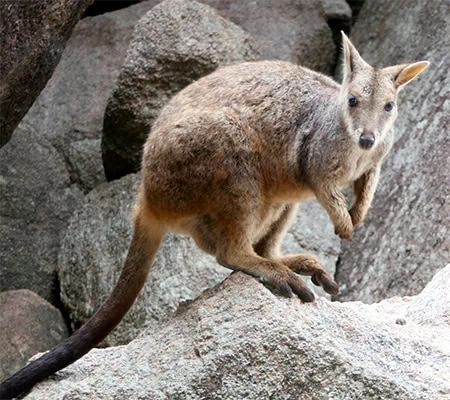
(Petrogale assimilis)
Allied Rock Wallaby
Квінслендський наскельний валлабі
It is endemic to Queensland in Australia. Its range extends from Townsville to the Burdekin River, the Bowen River, Croydon and Hughenden, and includes Magnetic and Palm Islands. It occurs at elevations of up to 1,000 m in rocky areas, both in woodland and in more lightly-treed areas.
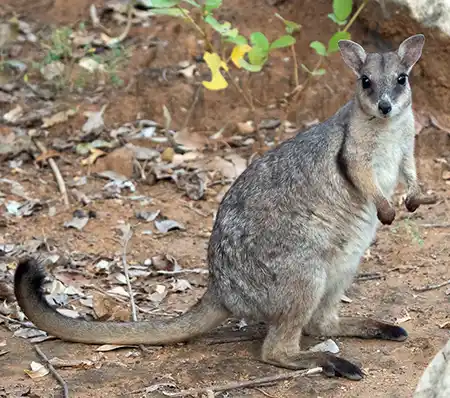
(Petrogale brachyotis)
Western Short-eared Rock Wallaby
Коротковухий наскельний валабі
It is found in northern Australia, in the northernmost parts of the Northern Territory and Western Australia. It occurs in monsoonal rainforests and open grasslands, where it inhabits cliffs, hills, and valleys that provide refuge and forage.
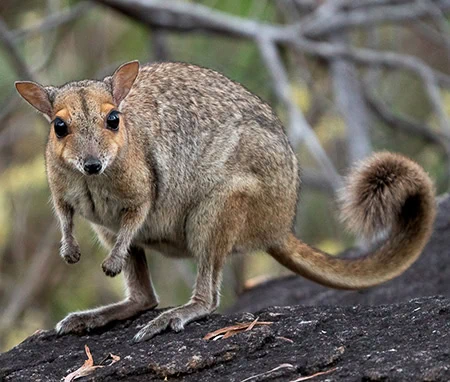
(Petrogale burbidgei)
Monjon
Валабі Бербіджа
It is found in north-western Australia. They are restricted to a small area of the Kimberley in the state of Western Australia, and on nearby islands within the Bonaparte Archipelago.
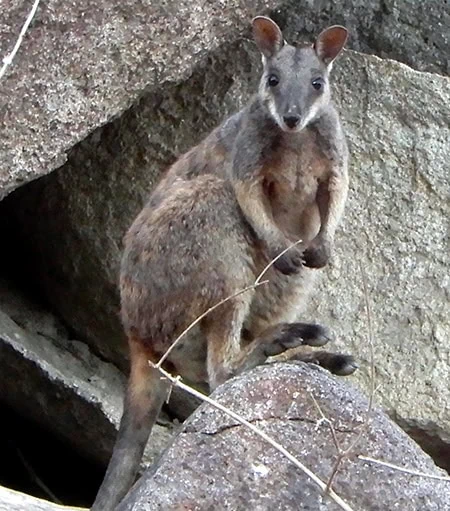
(Petrogale coenensis)
Cape York Rock Wallaby
Кейп-йоркський наскельний валабі
It is found Cape York Peninsula in north-eastern Queensland, Australia.
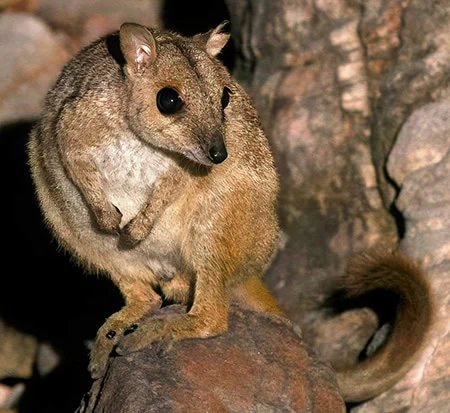
(Petrogale concinna)
Nabarlek
Набарлек
It is found in three distinct and geographically isolated populations: in Arnhem Land, the north-western Kimberley region, and the area between the Mary and Victoria Rivers in the Top End of Australia. It inhabits scrubby vegetation over sandstone formations, granitic outcrops, breakaways of laterite, boulder piles and rocky slopes.
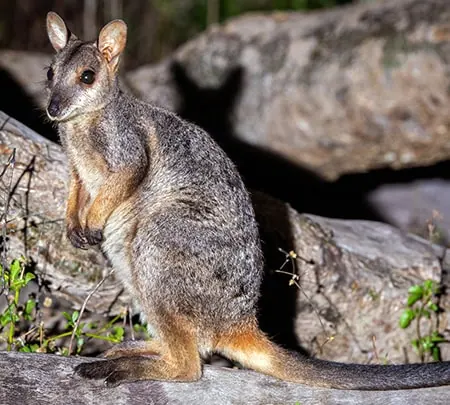
(Petrogale godmani)
Godman's Rock Wallaby
Валабі Годмана
It is found in northern and north-eastern Queensland, Australia. It inhabits low open forest, open scrub, or montane regions, often near the coast.
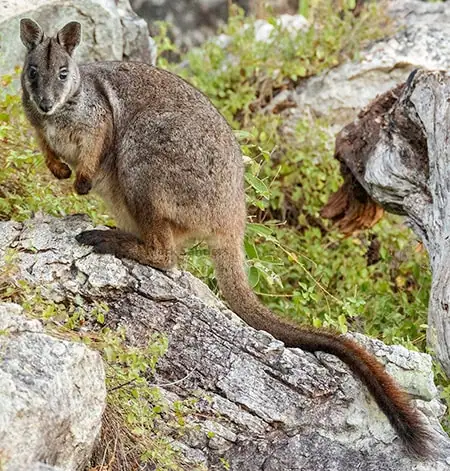
(Petrogale herberti)
Herbert's Rock Wallaby
Валабі Герберта
It is found in north-eastern Queensland, Australia.
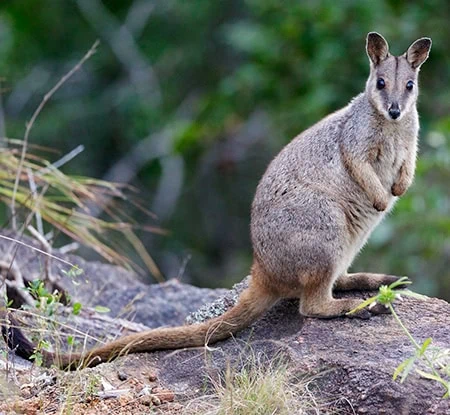
(Petrogale inornata)
Unadorned Rock Wallaby
Очковий наскельний валабі
It is found in north-eastern Queensland, Australia. It is patchily distributed in coastal ranges from around Rockhampton to near Townsville.
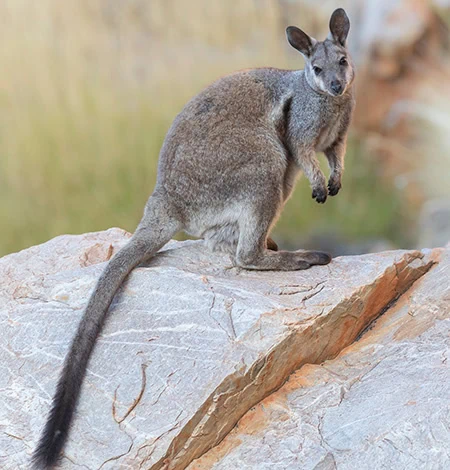
(Petrogale lateralis)
Black-flanked Rock Wallaby
Чорнобокий наскельний валабі
It is found in mostly isolated populations across western and southern Western Australia, the Northern Territory and parts of South Australia. It lives in mountainous areas with granite outcrops, sandstone cliffs, scree slopes, and hummock grasses with a few trees and shrubs, and also near coastal limestone cliffs.
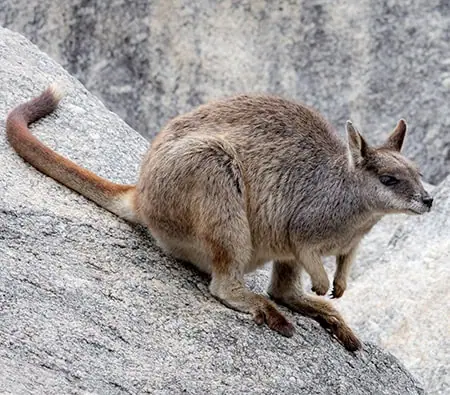
(Petrogale mareeba)
Mareeba Rock Wallaby
It is found around Mareeba in northeastern Queensland, Australia.
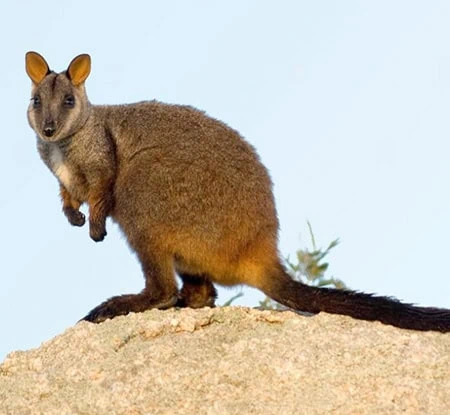
(Petrogale penicillata)
Brush-tailed Rock Wallaby
Щіткохвостий наскельний валабі
It inhabits rock piles and cliff lines along the Great Dividing Range from about 100 km north-west of Brisbane to northern Victoria, in vegetation ranging from rainforest to dry sclerophyll forests.
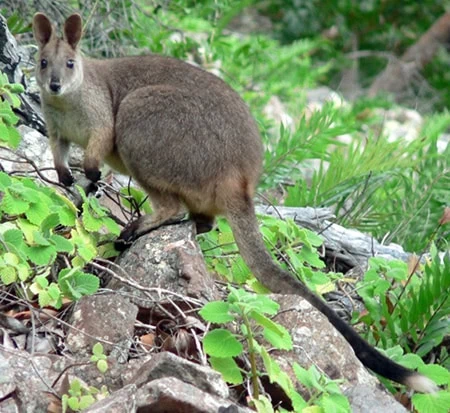
(Petrogale persephone)
Proserpine Rock Wallaby
Наскельний валабі Персефони
It is restricted to a small area in Conway National Park, Dryander National Park, Gloucester Island National Park, and around the town of Airlie Beach, all in the Whitsunday Region of Queensland, Australia.
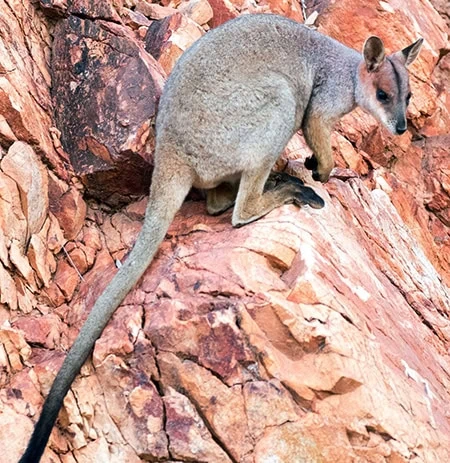
(Petrogale purpureicollis)
Purple-necked Rock Wallaby
Пурпуровошиїй наскельний валабі
It is endemic to Australia, where it occurs in north-western Queensland. It inhabits areas with rocky outcrops, cliffs, and boulder formations near dry woodland savannas and spinifex grasslands.
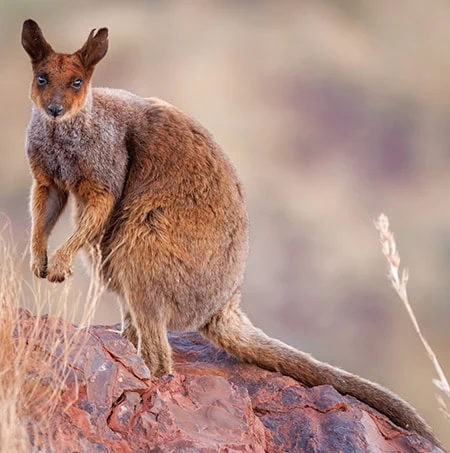
(Petrogale rothschildi)
Rothschild's Rock Wallaby
Наскельний валабі Ротшильда
It is found in Western Australia, in the Pilbara district and the Dampier Archipelago.
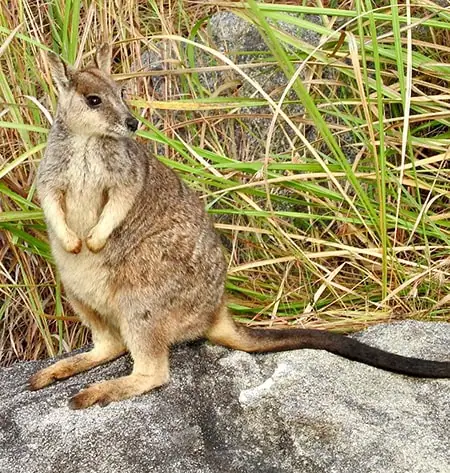
(Petrogale sharmani)
Mount Claro Rock Wallaby
Наскельний валабі Шармана
It is found in north-eastern Queensland, Australia.
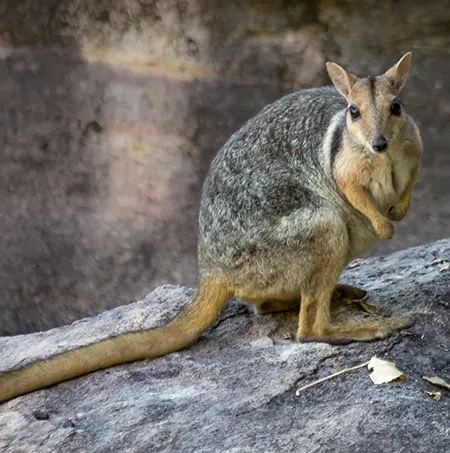
(Petrogale wilkinsi)
Eastern Short-eared Rock Wallaby
Наскельний валабі Вілкінса
It is found in the northernmost parts of the Northern Territory of Australia, and is common in the Kakadu and Litchfield National Parks.
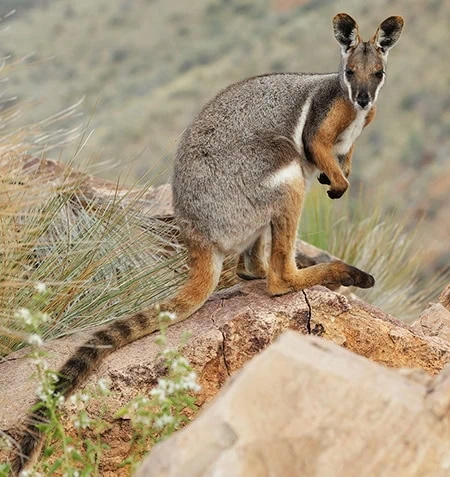
(Petrogale xanthopus)
Yellow-footed Rock Wallaby
Жовтоногий наскельний валабі
It is found in western New South Wales, eastern South Australia and isolated portions of Queensland. It is not typically found near human habitation, instead preferring rough terrain and rock outcroppings.
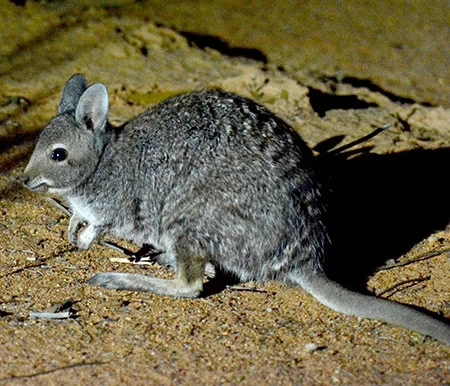
(Lagostrophus fasciatus)
Banded Hare Wallaby
Смугастий валабі-заєць
Its only surviving natural populations are now restricted to Bernier Island and Dorre Island off Western Australia. It has been successfully reintroduced to Faure Island and Dirk Hartog Island in Shark Bay, and to a large fenced reserve at Mount Gibson Sanctuary in Western Australia.
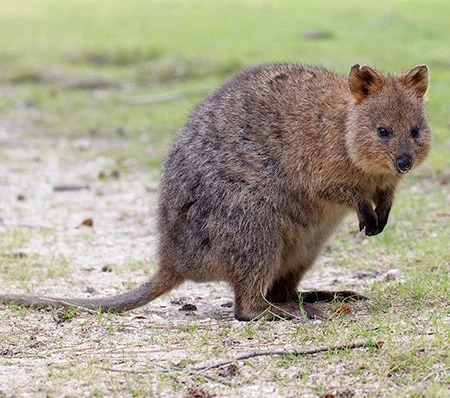
(Setonix brachyurus)
Quokka
Квока
It is found in a small area of southwestern Australia. It inhabits some smaller islands off the coast of Western Australia, particularly Rottnest Island just off Perth and Bald Island near Albany. Isolated, scattered populations also exist in forest and coastal heath between Perth and Albany.
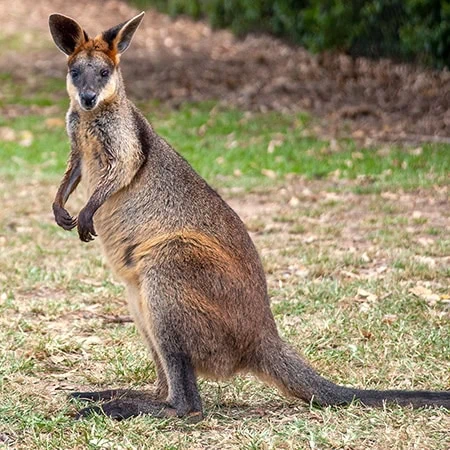
(Wallabia bicolor)
Swamp Wallaby
Валабі двоколірний
It is found from the northernmost areas of Cape York Peninsula in Queensland, down the entire east coast and around to western Victoria and south-eastern South Australia. It inhabits thick undergrowth in forests and woodlands.