
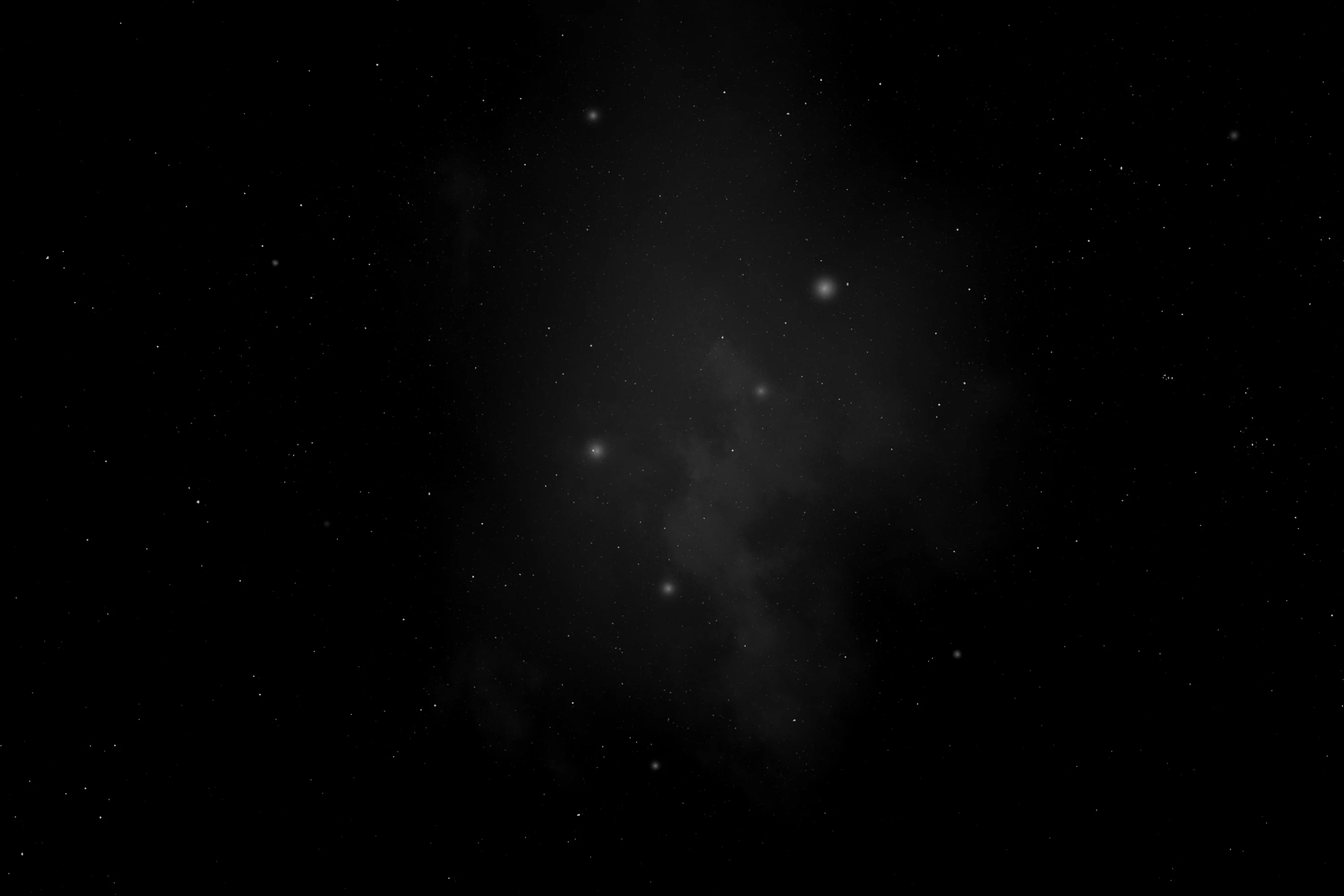

(Vombatidae)
Wombats
Вомбатові
Wombats are short-legged, muscular quadrupedal marsupials of the family Vombatidae that are native to Australia.
Wombats dig extensive burrow systems with their rodent-like front teeth and powerful claws. One distinctive adaptation of wombats is their backward pouch. The advantage of a backward-facing pouch is that when digging, the wombat does not gather soil in its pouch over its young. Although mainly crepuscular and nocturnal, wombats may also venture out to feed on cool or overcast days. They are not commonly seen, but leave ample evidence of their passage, treating fences as minor inconveniences to be gone through or under.
Wombats leave distinctive cube-shaped faeces. As wombats arrange these feces to mark territories and attract mates, it is believed that the cubic shape makes them more stackable and less likely to roll, which gives this shape a biological advantage. The method by which the wombat produces them is not well understood, but it is believed that the wombat intestine stretches preferentially at the walls, with two flexible and two stiff areas around its intestines. The adult wombat produces between 80 and 100, 2 cm pieces of feces in a single night, and four to eight pieces each bowel movement.
All wombat teeth lack roots and are ever-growing, like the incisors of rodents. Wombats are herbivores; their diets consist mostly of grasses, sedges, herbs, bark, and roots. Their incisor teeth somewhat resemble those of rodents (rats, mice, etc.), being adapted for gnawing tough vegetation. Like many other herbivorous mammals, they have a large diastema between their incisors and the cheek teeth, which are relatively simple.
Male wombats have penile spines, a non-pendulous scrotum, and three pairs of bulbourethral glands. The testes, prostate, and bulbourethral glands enlarge during the breeding season. Female wombats give birth to a single young after a gestation period of roughly 20–30 days, which varies between species. All species have well-developed pouches, which the young leave after about six to seven months. Wombats are weaned after 15 months, and are sexually mature at 18 months.
A group of wombats has been called a wisdom, a mob, or a colony, but are better known as solitary animals.
Wombats typically live up to 15 years in the wild, but can live past 20 and even 30 years in captivity. The longest-lived captive wombat lived to 34 years of age.
Ecology and behaviour
Wombats have an extraordinarily slow metabolism, taking around 8 to 14 days to complete digestion, which aids their survival in arid conditions. They generally move slowly. Wombats defend home territories centred on their burrows, and they react aggressively to intruders. The common wombat occupies a range of up to 23 ha, while the hairy-nosed species have much smaller ranges, of no more than 4 ha.
Dingos and Tasmanian devils prey on wombats. Extinct predators were likely to have included Thylacoleo and possibly the thylacine (Tasmanian tiger). Their primary defence is their toughened rear hide, with most of the posterior made of cartilage. This, combined with its lack of a meaningful tail, makes it difficult for any predator that follows the wombat into its tunnel to bite and injure its target. When attacked, wombats dive into a nearby tunnel, using their rumps to block a pursuing attacker. According to an urban legend, wombats sometimes allow an intruder to force its head over the wombat’s back, and then use its powerful legs to crush the skull of the predator against the roof of the tunnel. However, there is no evidence to support this.
Wombats are generally quiet animals. Bare-nosed wombats can make a number of different sounds, more than the hairy-nosed wombats. Wombats tend to be more vocal during mating season. When angered, they can make hissing sounds. Their call sounds somewhat like a pig’s squeal. They can also make grunting noises, a low growl, a hoarse cough, and a clicking noise.
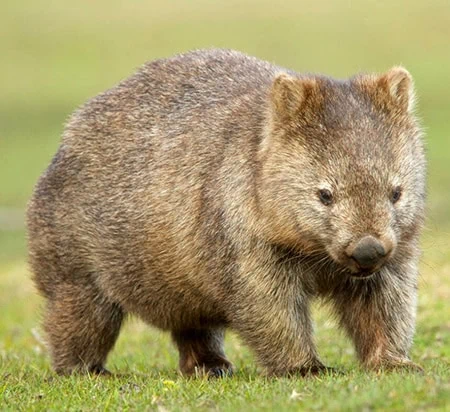
(Vombatus ursinus)
Bare-nosed Wombat
Вомбат ведмежий
It is widespread in the cooler, better-watered regions of southern and eastern Australia, including Tasmania and Victoria, and in mountain districts as far north as southern Queensland.
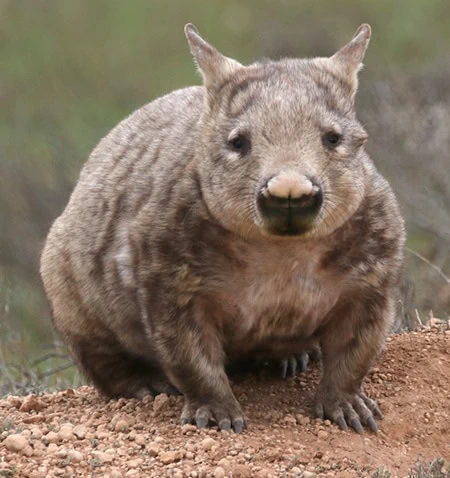
(Lasiorhinus latifrons)
Southern Hairy-nosed Wombat
Південний вомбат
It is found in Western Australia, southern South Australia, and south-western New South Wales. It inhabits semiarid to arid grasslands and woodlands.
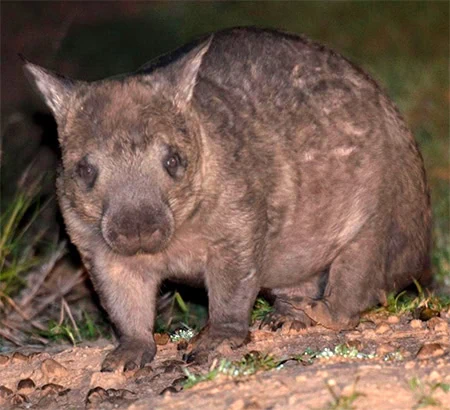
(Lasiorhinus krefftii)
Northern Hairy-nosed Wombat
Північний вомбат
It is found in the Epping Forest National Park in east-central Queensland, Australia. It requires deep sandy soils in which to dig its burrows and a year-round supply of grass, its primary food. These habitats usually occur in open eucalypt woodlands.


