

(Hexanchiformes)
Cow and Frilled Sharks
Багатозяброподібні
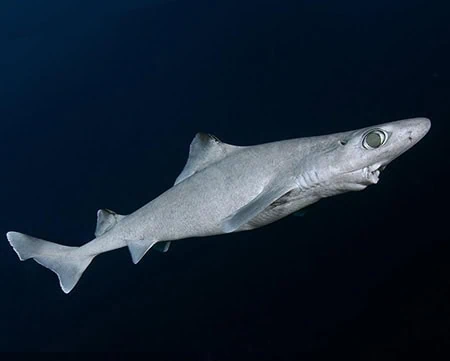
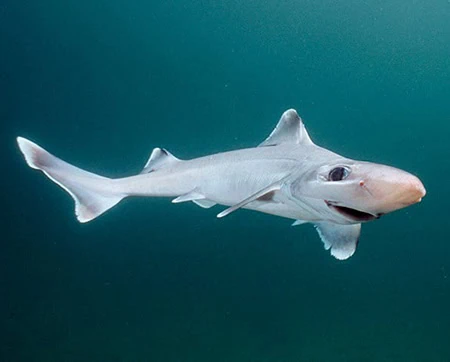
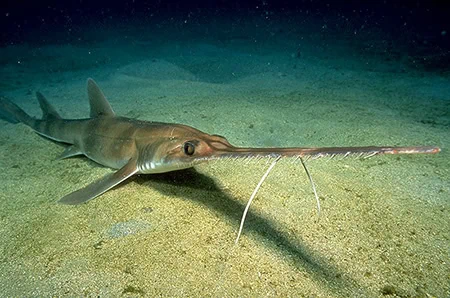
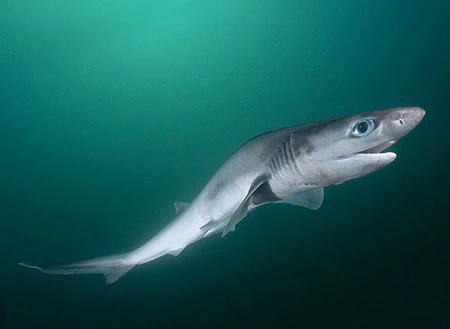
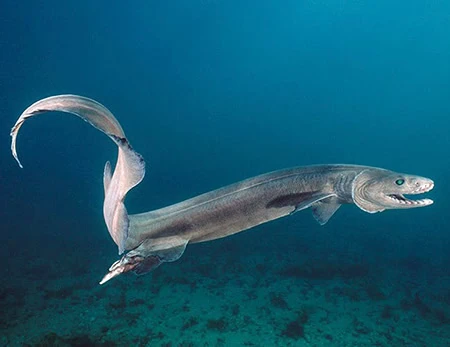
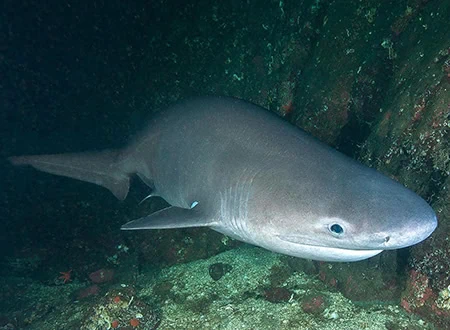
The Hexanchiformes are a primitive order of sharks, numbering just five extant species in two families, Chlamydoselachidae and Hexanchidae. Chlamydoselachidae are also known as frilled sharks, these sharks are very rare fishes and typically reside in deeper waters. Hexanchidae are also known as cow sharks and are the lesser known of the two types of Hexanchiformes and also reside in deep waters.
Hexanchiform sharks have one spineless dorsal fin located over or behind the pelvic fins. Therefore, they do not have a “main dorsal fin”, that is, the large dorsal fin located towards the middle of the back, unlike other orders of sharks. The vertebral column extends into the long dorsal lobe of the caudal fin, while the ventral lobe is either small or absent. They have either six or seven gill slits, located in front of the pectoral fins. They have a large mouth, with eyes on either side of the head. The spiracles are small and located well above and behind the eyes. The eyes have no nictitating membrane.
The frilled sharks of the genus Chlamydoselachus are very different from the cow sharks, and have been proposed to be moved to a distinct order, Chlamydoselachiformes. However, genetic studies have found them to be each other’s closest relatives, and they share certain derived features supporting them both being in the same order.
Shark teeth similar to modern hexanchids and echinorhinids are known from Devonian deposits in Antarctica and Australia, as well as Permian deposits in Japan. If these are in fact hexanchids, this may be the only extant order of elasmobranchs to have survived the Permian extinction (and by extension, the oldest extant order of elasmobranchs). However, the Australian/Antarctic shark teeth, from the family Mcmurdodontidae, have also been found to lack a multilayer enameloid layer covering the tooth crown, something found in all modern sharks and most Devonian sharks, indicating that they are neoselachians of uncertain affinity or even indeterminate chondrichthyans. The occurrence of derived sharks in the Devonian is also irreconcilable with the results of all phylogenetic estimates in the group.
Distribution
Species are widespread and found across most of the world. They are most common in cold deep water in the tropics, but are also found closer to the shore in more temperate regions.
Reproductive biology
Hexanchiforms are viviparous, meaning they give birth to live young. Males have two testes which are capable of producing sperm year-round and females have two ovaries and two uteri. Chlamydoselachus africana Males have two testes which produce sperm and females have two ovaries and ovulate from summer to autumn. Embryos develop only in the right uterus of a female. The research regarding the reproductive Biology of the Hexanchidae family is limited but thought to be similar, as no year-round research has been done regarding female hexanchids.