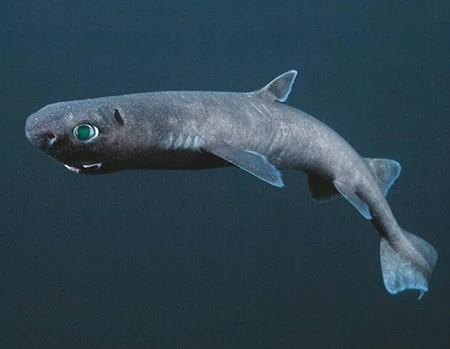


(Scyliorhinidae)
Catsharks
Котячі акули
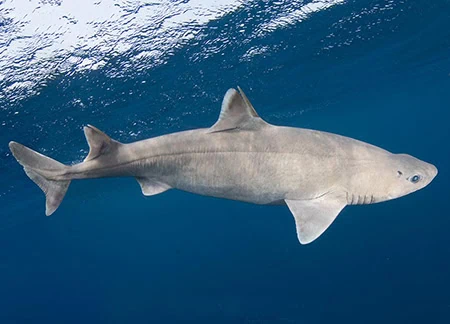
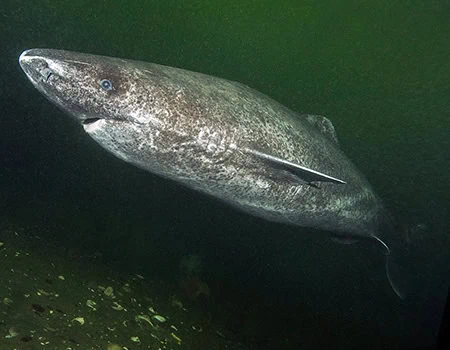
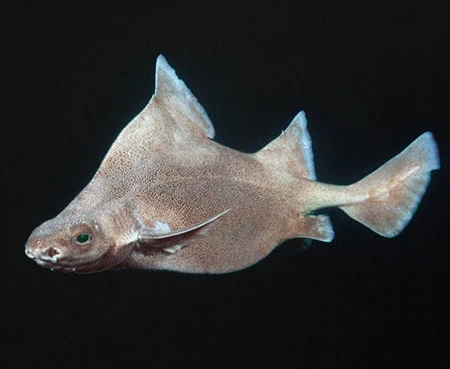
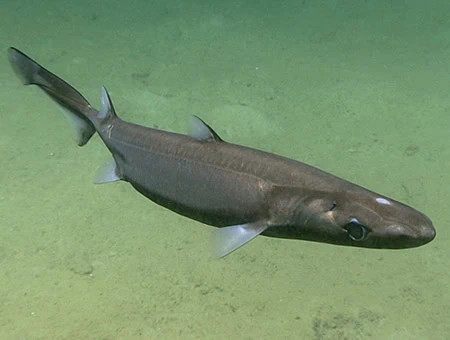
Scyliorhinidae is a family of sharks, one of a few families whose members share the common name catsharks, belonging to the order Carcharhiniformes, the ground sharks. Although they are generally known as catsharks, some species can also be called dogfish due to previous naming. However, a dogfish may generally be distinguished from a catshark as catsharks lay eggs while dogfish have live young, as well as the fact that dogfish lack an anal fin. Like most bottom feeders, catsharks feed on benthic invertebrates and smaller fish. They are not harmful to humans. The family is paraphyletic, containing several distinct lineages that do not form a monophyletic group.
Anatomy and appearance
Scyliorhinidae catsharks may be distinguished by their elongated, cat-like eyes and two small dorsal fins set far back. Most species are fairly small, growing no longer than 80 cm; a few, such as the nursehound (Scyliorhinus stellaris) can reach 1.6 m in length. Most of the species have a patterned appearance, ranging from stripes to patches to spots.
The sonic hedgehog dentition expression is first found as a bilateral symmetrical pattern and is found in certain areas of the embryonic jaw. Sonic hedgehog (a secreted protein that, in humans, is encoded by the SHH gene) is involved in the growth and patterning of different organs. Every 18–38 days the teeth are replaced as is a common characteristic of the developmental process of sharks.
The “swell sharks” of the genus Cephaloscyllium have the curious ability to fill their stomachs with water or air when threatened, increasing their girth by a factor of one to three.
Some catsharks, such as the chain catshark (Scyliorhinus retifer) are biofluorescent.
Distribution
Scyliorhinidae catsharks are found around seabeds in temperate and tropical seas worldwide, ranging from very shallow intertidal waters to depths of 2,000 m or more. They are usually restricted to small ranges. Juvenile and adult chain catshark (Scyliorhinus retifer) live on the soft or rocky bottom of the Atlantic from Massachusetts to Nicaragua. Adults tend to live on the soft, sandy bottoms possibly due to their need of egg deposition sites.
Behaviour
Scyliorhinidae includes species that do not undergo long distance migrations because they are poor swimmers. Due to being nocturnal, some species sleep close together in crevices throughout the day and then go hunting at night. Some species such as the small-spotted catshark (Scyliorhinus canicula), are sexually monomorphic and exhibit habitat segregation, where males and females live in separate areas; males tend to live in open seabeds, while females tend to live in caves. Some species of catsharks may deposit egg cases in structured habitats, which may also act as nurseries for the newly hatched sharks.
Reproduction
Scyliorhinidae includes many species of catsharks, that like the chain catshark (Scyliorhinus retifer), are oviparous and lay eggs in tough egg cases with curly tendrils at each end, known as “mermaid’s purses”, for protection, onto the seabed. Almost a year is needed for a catshark to hatch from the egg. Instead of laying the eggs and letting them sit for a year, some species of catsharks hold onto the eggs until a few months before the shark hatches. Some catsharks exhibit ovoviviparity, aplacental viviparous, by holding onto the embryos until they are completely developed and then give live birth. Some species of catsharks mate by biting and holding the female’s pectoral fins and wrestle her into a mating position.
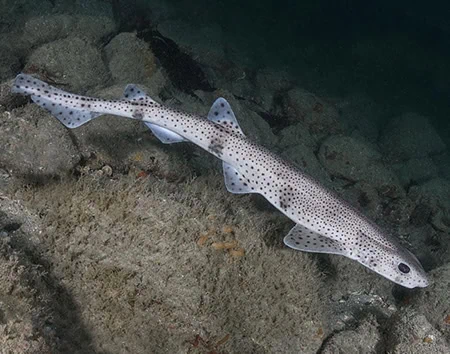
(Scyliorhinus canicula)
Small-spotted Catshark
Котяча акула дрібноплямиста
It is found on the continental shelves and the uppermost continental slopes off the coasts of Norway and the British Isles south to Senegal and in the Mediterranean, between latitudes 63° N and 12° N. It is found primarily over sandy, gravelly, or muddy bottoms from depths of a few metres down to 400 m.
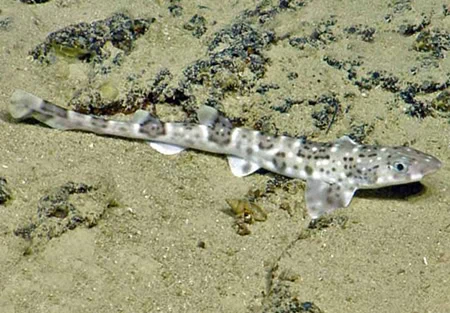
(Scyliorhinus boa)
Boa Catshark
Котяча акула карибська
It is found on the continental shelves and insular slopes of the Caribbean Sea and the Gulf of Mexico, between latitudes 20° N and 9° N, at depths between 330 and 675 m.
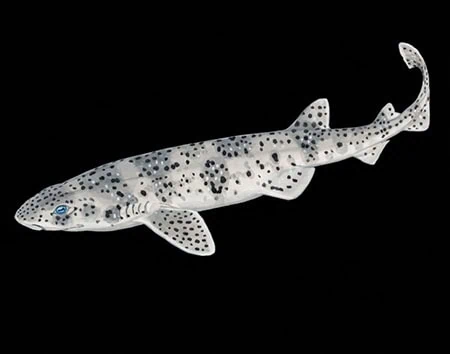
(Scyliorhinus cabofriensis)
Brazilian Catshark
Котяча акула бразильська
It is found in Cabo Frio, Rio de Janeiro south-eastern Brazil, at depths of 387–647 m.
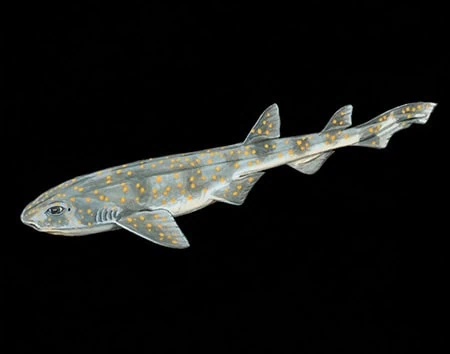
(Scyliorhinus capensis)
Yellow-spotted Catshark
Котяча акула жовтоплямиста
It is found in the seas around the coast of southern Africa at depths of 26–495 m. Its range extends from Lüderitz in Namibia to central Natal.
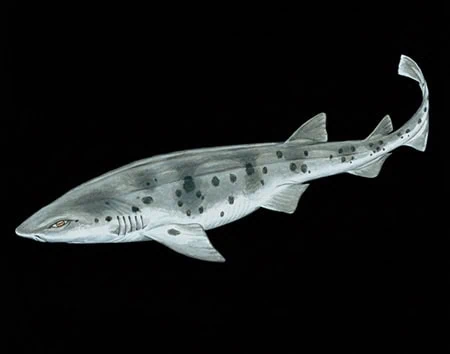
(Scyliorhinus cervigoni)
West African Catshark
Котяча акула західноафриканська
It is found in the eastern Atlantic Ocean at depths between 45 and 500 m. Its range extends from Mauritania in West Africa to Angola. It is a bottom-dwelling species inhabiting the continental shelf on muddy and rocky seabeds.
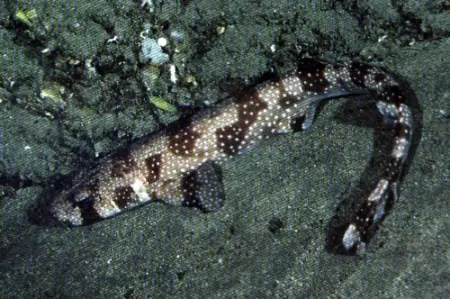
(Scyliorhinus comoroensis)
Comoro Catshark
Котяча акула коморська
The holotype and only specimen was taken from the Comoros Islands in the Indian Ocean, at a depth of 400 m.
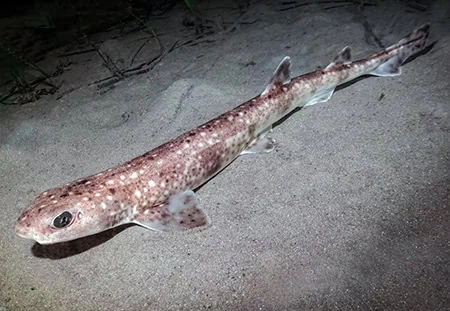
(Scyliorhinus duhamelii)
Duhamel's Catshark
Котяча акула Дюамеля
It is found in the Mediterranean Sea off Croatia, Greece, Tunisia, and Algeria, as well as in the Adriatic Sea, at depths of 43–75 m.
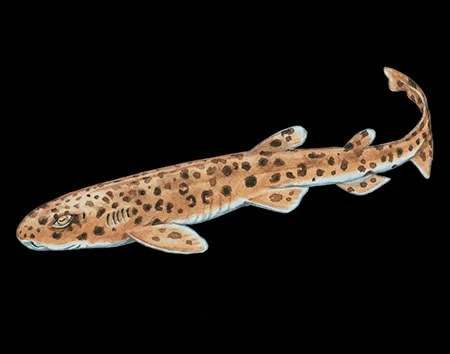
(Scyliorhinus garmani)
Brown-spotted Catshark
Котяча акула коричневоплямиста
It is found off the coast of the Philippines and northern Indonesia.
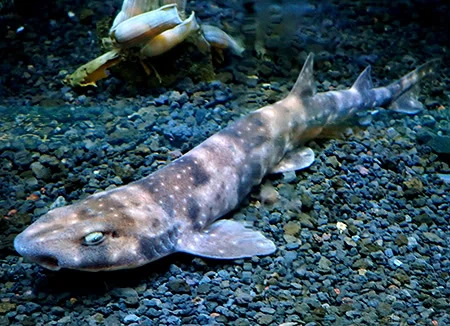
(Scyliorhinus hachijoensis)
Cinder Cloudy Catshark
Котяча акула хмарна
All specimens identified have been caught around the Izu Islands, off the coast of Japan, caught by longline at depths ranging from 100 m to 650 m.
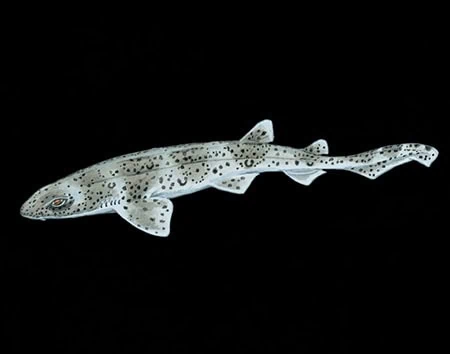
(Scyliorhinus haeckelii)
Freckled Catshark
Котяча акула веснянкувата
It is found on the continental shelf and upper slope of the western Atlantic Ocean, off western Venezuela, Suriname, Brazil, and Uruguay, at depths of 37–402 m.
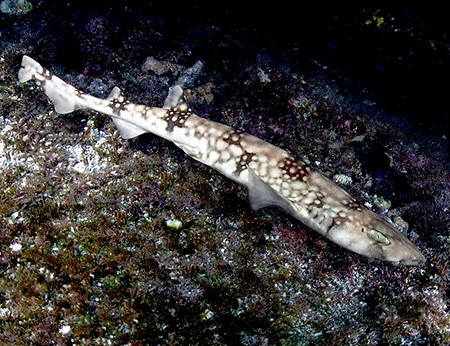
(Scyliorhinus hesperius)
White-saddled Catshark
Котяча акула центральноамериканська
It is found in the tropical western Atlantic and Caribbean Sea of Honduras, Panama and Colombia. It is a deep water, demersal fish and inhabits the continental slope, at a depth of 274–457 m.
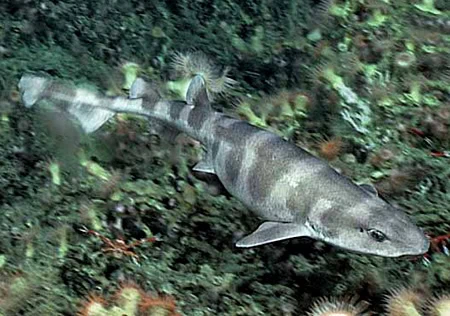
(Scyliorhinus meadi)
Blotched Catshark
Котяча акула багамська
It is found from North Carolina southward to the Santaren Channel between Florida, the Bahamas, Cuba, as well as in the Cayman Trench off northern Jamaica, and in the Gulf of Mexico north of the Yucatan Peninsula. It inhabits the upper continental slope, at a depth of 329–548 m.
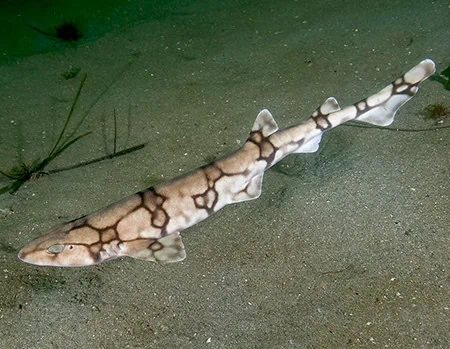
(Scyliorhinus retifer)
Chain Catshark
Котяча акула сітчаста
It is found in the Northwest Atlantic, Gulf of Mexico and Caribbean, ranging from George’s Bank in Massachusetts, to Nicaragua and Barbados, at depths of 36–750 m.
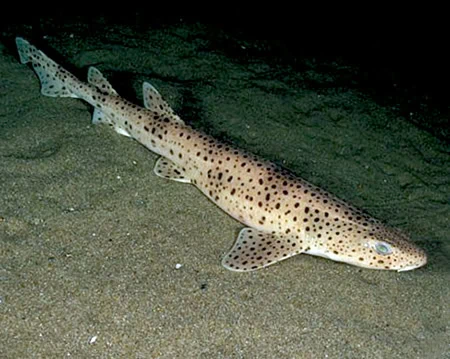
(Scyliorhinus stellaris)
Nursehound
Котяча акула зірчаста
It is found in the north-eastern Atlantic from southern Norway and Sweden to Senegal, including off the British Isles, throughout the Mediterranean Sea, and the Canary Islands. It occurs from the intertidal zone to depths of 400 m, but is most common between 20 and 60 m.
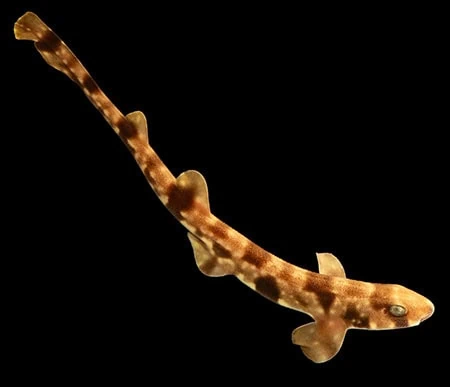
(Scyliorhinus torazame)
Cloudy Catshark
Котяча акула японська
It is common in the north-western Pacific off Japan, Korea, China, and possibly the Philippines. It can be found from the shore out to a depth of 320 m on the continental shelf and upper continental slope.
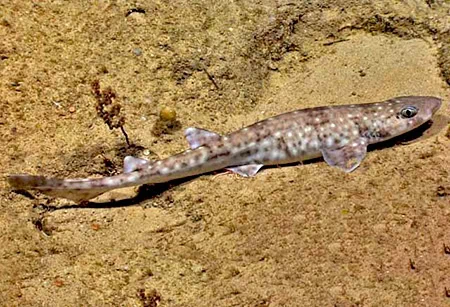
(Scyliorhinus torrei)
Dwarf Catshark
Котяча акула карликова
It is found off the coasts of southern Florida, the Bahamas and Cuba, at depths of 200–600 m.
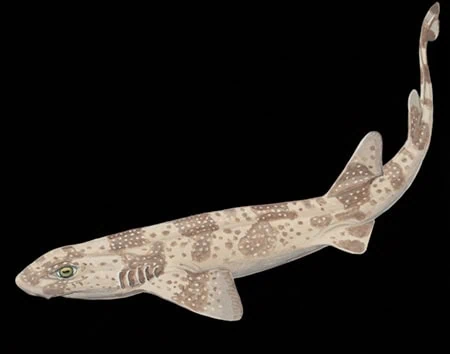
(Scyliorhinus ugoi)
Dark-freckled Catshark
Котяча акула темноплямиста
It is found in north-eastern and south-eastern Brazil, at depths of 400–500 m.
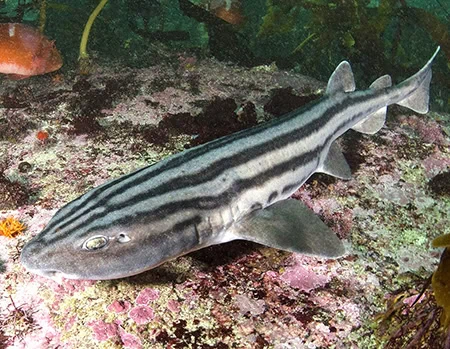
(Poroderma africanum)
Pyjama Shark
Котяча акула смугаста
It inhabitant of temperate inshore waters, the pyjama shark is found off South Africa, from Table Bay off Cape Town to north of East London. It is commonly encountered in very shallow intertidal and littoral waters no more than 5 m deep, however, it can be found at depths of 50–108 m.
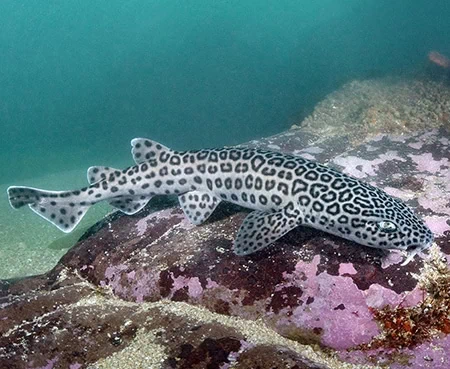
(Poroderma pantherinum)
Leopard Catshark
Котяча акула леопардова
It inhabits the temperate and subtropical inshore waters off South Africa, from Saldanha Bay in the west to the mouth of the Tugela River in the east. It is most commonly encountered from the intertidal zone to a depth of 20 m, though it has been reported from as deep as 256 m.
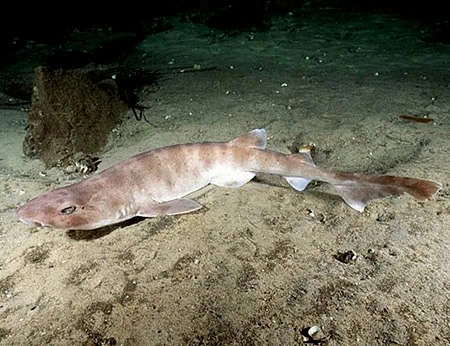
(Cephaloscyllium albipinnum)
Whitefin Swellshark
Головаста акула білоплавцева
It is endemic to southeastern Australia. It is a bottom-dweller that inhabits the outer continental shelf and upper continental slope, at depths of 126–554 m.
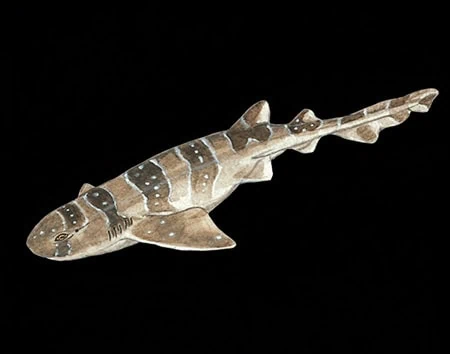
(Cephaloscyllium cooki)
Cook's Swellshark
Головаста акула Кука
It is only found in the Arafura Sea, from the Northern Territory of Australia to the Tanimbar Islands of Indonesia, at depths of 223–300 m.
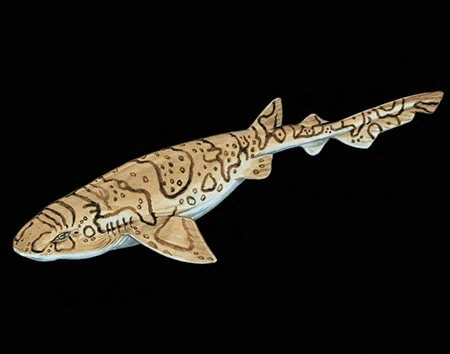
(Cephaloscyllium fasciatum)
Reticulated Swellshark
Головаста акула сітчаста
It is found in the western Pacific Ocean near China and Australia, at depths of 200–450 m.
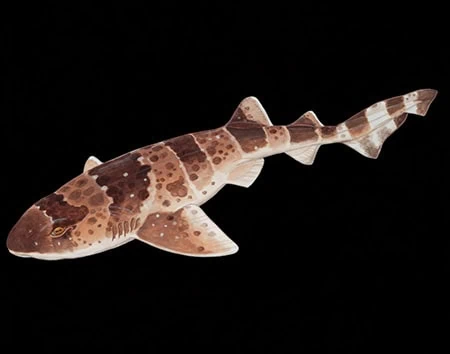
(Cephaloscyllium formosanum)
Formosa Swellshark
Сітчаста головаста тайванська
It is found off Taiwan, at depths of up to 366 m.
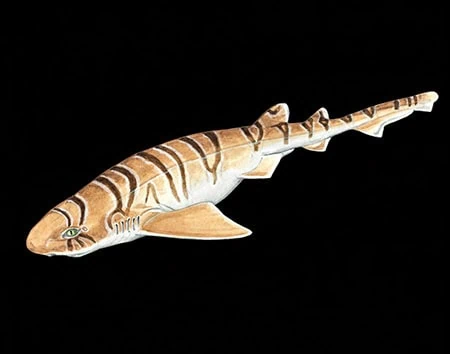
(Cephaloscyllium hiscosellum)
Australian Reticulate Swellshark
Сітчаста головаста акула австралійська
Its range is limited to the upper continental slope off north-western Australia, between Geraldton and Broome. It occurs at depths of 290–420 m.
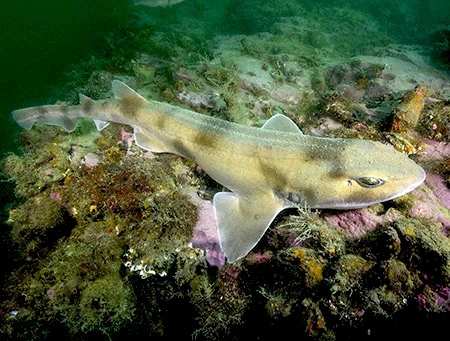
(Cephaloscyllium isabella)
New Zealand Draughtboard Shark
Головаста акула новозеландська
It is found in the coastal waters around Tasmania, New Zealand. It typically occurs at depths of 0 to 400 m on continental and insular shelves, though it has been recorded from as far down as 673 m.
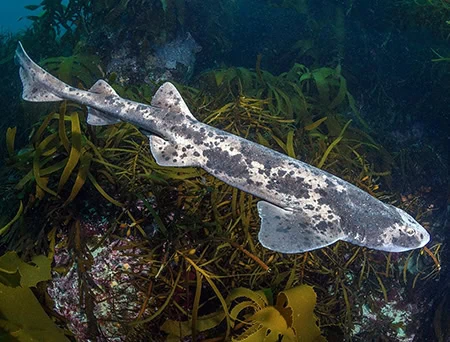
(Cephaloscyllium laticeps)
Draughtboard Shark
Головаста акула австралійська
It inhabits the continental shelf of southern Australia, from the Recherche Archipelago off Western Australia to Jervis Bay in New South Wales, including Tasmania. It is commonly found on or near the bottom amongst rocky reefs or seaweed beds, from close to shore to a depth of 220 m.
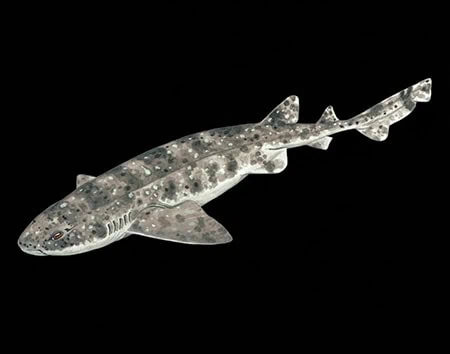
(Cephaloscyllium pictum)
Painted Swellshark
Головаста акула строката
It is found in eastern Indonesia and Timor-Leste, at depths of 536–570 m.
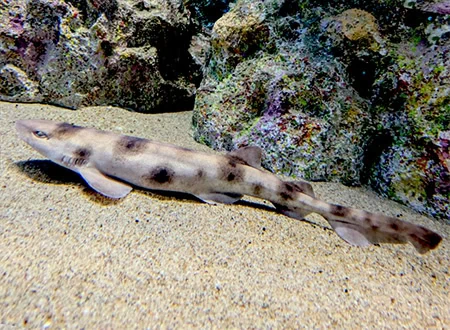
(Cephaloscyllium sarawakense)
Sarawak Pygmy Swell Shark
Головаста акула саравакська карликова
It is found in the benthic zone of the South China Sea (off western Taiwan, Hong Kong, the Gulf of Tonkin, Vietnam, and Malaysia), at depths of 118–165 m.
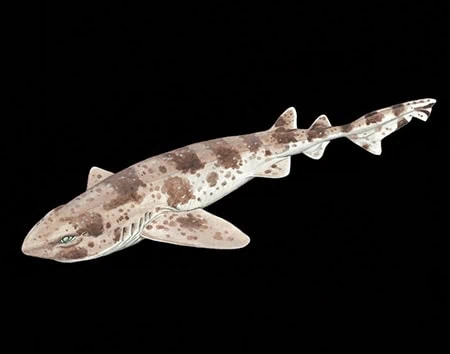
(Cephaloscyllium signourum)
Flagtail Swellshark
Головаста акула прапорохвоста
It is found at depths of 480–700 m off north-eastern Queensland, Australia, and possibly also around nearby islands.
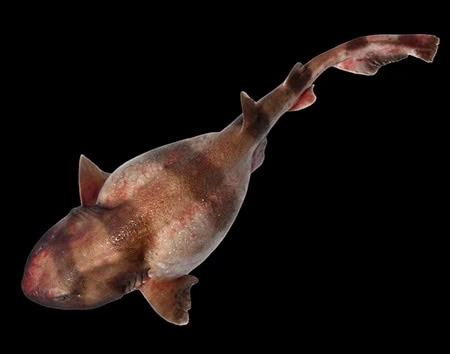
(Cephaloscyllium silasi)
Indian Swellshark
Головаста акула індійська
It is found in the western Indian Ocean near Quilon, India and Sauqira Bay, Oman, at depths of 250–500 m.
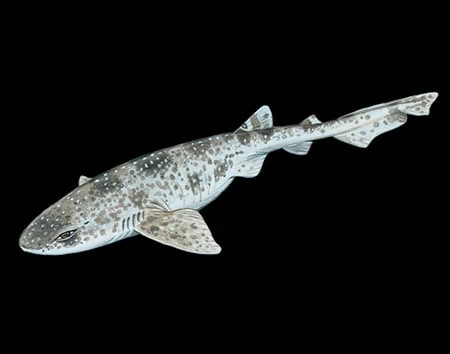
(Cephaloscyllium speccum)
Speckled Swellshark
Головаста акула крапчаста
It is found only off Western Australia, from Rowley Shoals to Ashmore Reef. It inhabits the outer continental shelf and upper continental slope at depths of 150–455 m.
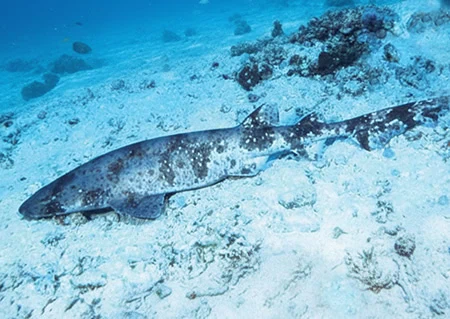
(Cephaloscyllium stevensi)
Steven's Swellshark
Головаста акула Стівена
It inhabits waters off the south-eastern coast of New Guinea, at depths of 240–274 m.
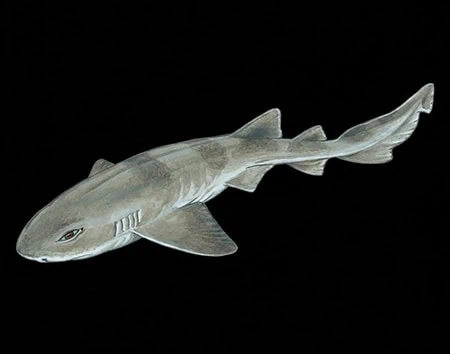
(Cephaloscyllium sufflans)
Balloon Shark
Акула-повітряна куля
It is restricted to the waters off the South African province of KwaZulu-Natal and Mozambique. It inhabits the continental shelf and upper continental slope, at depths of 40–600 m.
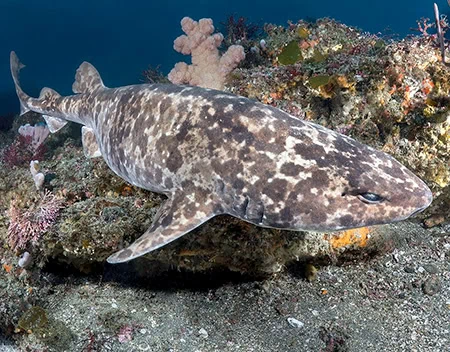
(Cephaloscyllium umbratile)
Japanese Swellshark
Головаста акула японська
It is known to inhabit the north-western Pacific Ocean from Hokkaido, Japan southward to Taiwan, including the Yellow Sea. It is a bottom-dweller that inhabits rocky reefs on the continental shelf, at depths of 90–200 m.
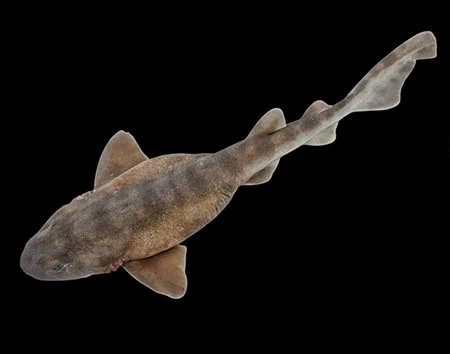
(Cephaloscyllium variegatum)
Saddled Swellshark
Головаста акула сідлоподібна
It is found off the eastern coast of Australia, from Rockingham Bay in Queensland to Tathra in New South Wales, at depths of 115–605 m.
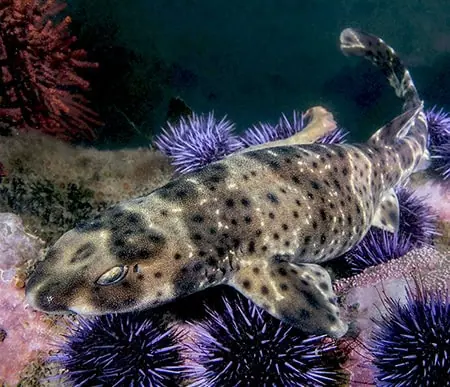
(Cephaloscyllium ventriosum)
Swellshark
Головаста акула каліфорнійська
It is found in the eastern Pacific Ocean, from the central California coast to southern Mexico. There is an additional population off the coast of Chile. It can be found at depths of 5–457 m.
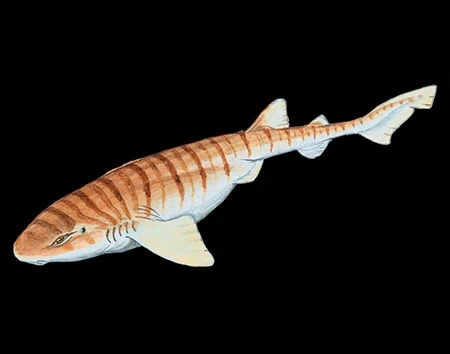
(Cephaloscyllium zebrum)
Narrowbar Swellshark
Вузькосмуга головаста акула
It has only been found at a depth of 444–454 m on the upper continental slope, near Flinders Reef off the Australian state of Queensland.